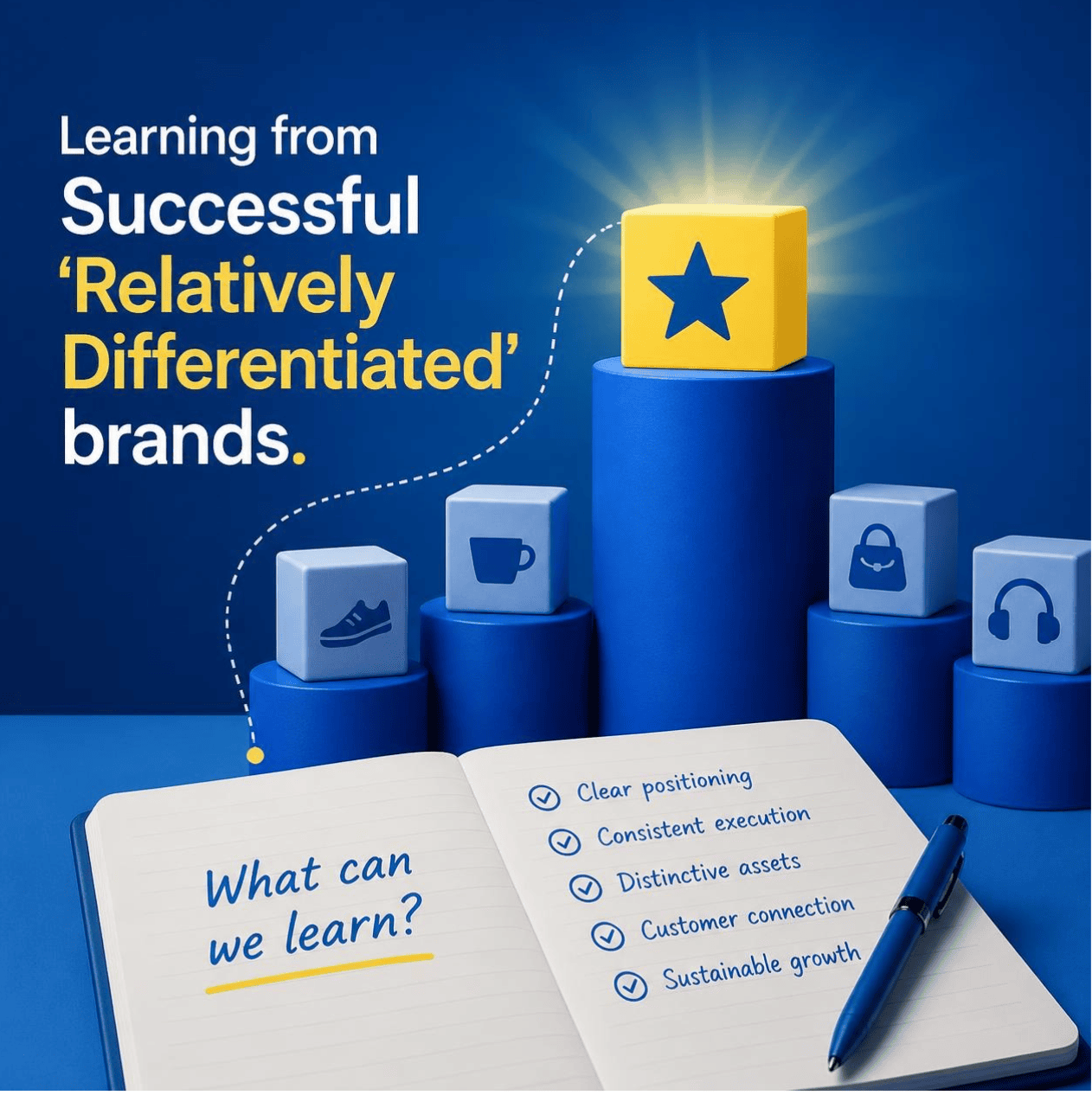
Introduction: Learning from Successful ‘Relatively Differentiated’ brands
The Brand differentiation examples in this article show how companies become more recognisable and more strongly associated with the things that matter to category buyers. The strongest examples extend beyond product features. They combine a clear brand story, distinctive customer experience, recognisable assets and consistent behaviour across every buyer touchpoint.
Don’t think of differentiation as something “unique”, but something “relative”.
Brand Differentiation exists when buyers perceive a relevant relative difference. The brand becomes more strongly associated with an experience, quality or value than its competitors.
This should be distinguished from distinctiveness:
- Brand Differentiation provides a potential reason to choose the brand.
- Brand Distinctiveness makes the brand easier to notice, identify and remember.
- Mental Availability links the brand with the buying situations that trigger category purchase.
Relative Brand Differentiation can give buyers a reason to prefer one company over another. Distinctiveness then helps them recognise and recall which brand delivers that difference. Together, these elements support Mental Availability: the probability that the brand comes to mind when a relevant buying situation occurs.
Being unusual does not automatically create a competitive advantage. A provocative campaign, unconventional logo or different tone of voice may attract attention without giving buyers a meaningful reason to choose the brand.
Successful brands create a coherent experience or meaning and use recognisable assets to ensure buyers attribute it to the correct brand.
Customer Experience as Brand Differentiation
In categories where products are relatively similar, the customer experience can become the most visible source of brand differentiation.
Buyers may struggle to remember minor differences in product specifications, but they are more likely to remember whether dealing with a brand felt simple, enjoyable, reassuring or frustrating.
Starbucks: Turning Coffee into a Familiar Ritual

Starbucks did not invent coffee shops or premium coffee. Its relative differentiation came from creating a consistent experience that occupied a space between home and work.
Store design encouraged customers to stay. Drink customisation increased involvement in the purchase, while the terminology used for sizes and products created recognisable rituals. Seasonal launches introduced additional reasons to visit.
The implied proposition was:
Starbucks provides a familiar, personalised and accessible premium coffee experience within everyday routines.
The Pumpkin Spice Latte strengthened this by linking Starbucks with the beginning of autumn. The product became more than a flavour. It created a recurring seasonal memory structure.
Starbucks therefore built Mental Availability across several Category Entry Points:
- During the morning commute.
- When meeting someone informally.
- When taking a break from work.
- When looking for somewhere to sit outside the home or office.
- When seasonal products return.
The product, environment, language and visual identity all reinforced the same experience.
Slack: Making Workplace Software Feel Human
Slack entered a market dominated by email and formal enterprise communication tools. Its relative differentiation came from making workplace communication feel more intuitive, informal and enjoyable.
It redesigned important moments across onboarding and daily usage:
- Teams could begin using the product with relatively little implementation.
- Channels organised discussions around subjects and projects.
- Search made earlier conversations easier to retrieve.
- Integrations connected other workplace tools.
- A playful tone softened the traditional enterprise-software experience.
Its implied proposition was:
Slack makes workplace communication faster, more organised and more enjoyable than relying on email and traditional enterprise tools.
The product experience and brand voice were closely aligned. Slack did not communicate informally while delivering a rigid corporate interface. The whole experience supported the same intended meaning.
Brand Story and Values as Brand Differentiation
Brand values can create relative differentiation when they influence how the company operates. Values that appear only in advertising are unlikely to build lasting credibility.
Patagonia: Environmental Commitment Made Tangible
Patagonia has built a strong association with durable outdoor products and environmental responsibility.

The brand’s “Don’t Buy This Jacket” campaign challenged unnecessary consumption, but the message was supported by practical activity. Patagonia offered repairs, resale and initiatives designed to extend product life.
Its implied proposition was:
Patagonia is the outdoor brand for people who want durable performance products from a company prepared to act on its environmental beliefs.
The brand’s story is reinforced across:
- Product design and durability.
- Repair services.
- Resale and Worn Wear.
- Environmental campaigning.
- Documentary-style content.
- Its mountain logo and outdoor imagery.
Competitors can also claim environmental responsibility. Patagonia’s relative advantage comes from the depth and consistency with which it has delivered and communicated the commitment.
Nike: Performance and Personal Empowerment
Nike has built relative differentiation around performance, ambition and personal progress.
“Just Do It” provides a platform that can encompass elite sport and ordinary participation. Athlete endorsements give the performance message authority, while stories about everyday athletes make the emotional benefit more broadly accessible.
Its implied proposition is:
Nike is the sports brand that gives people the confidence and inspiration to pursue their athletic potential.
The position is reinforced through:
- Elite athlete partnerships.
- Product innovation.
- Emotional storytelling.
- The Nike swoosh.
- “Just Do It”.
- Consistent visual treatment of sport and movement.
The individual product features may change, but the core meaning remains recognisable.
Nike demonstrates how a long-running platform can build memory structures more effectively than a succession of unrelated campaign ideas.
Distinctive Brand Codes as Memory Devices
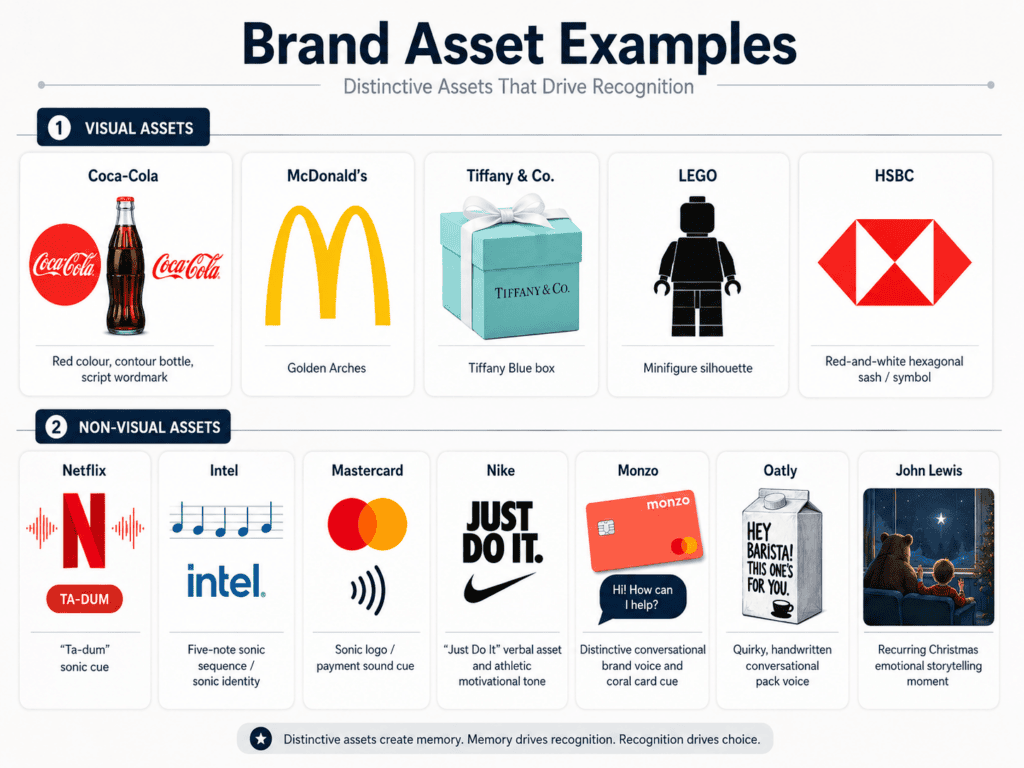
Distinctive Brand Assets do not necessarily give buyers a reason to prefer a brand. Their role is to ensure that people identify and remember it.
These assets include:
- Colours.
- Logos.
- Characters.
- Shapes.
- Sounds.
- Packaging structures.
- Typography.
- Verbal devices.
- Repeated visual styles.
The strongest brand examples connect these assets with a broader experience or meaning.
Apple: Design as a Complete Brand System
Apple’s differentiation is often described in terms of design, but that design extends far beyond the appearance of its devices.
It includes product naming, packaging, user interfaces, stores, advertising and the way devices work together.
Its implied proposition is:
Apple provides premium technology that feels simpler, more coherent and more desirable because its products and services are designed as one connected system.
The bitten-apple logo, restrained packaging, minimalist product photography and recognisable retail environments make the brand easy to identify.
Competitors may outperform Apple on individual specifications. Apple’s relative advantage comes from combining usability, ecosystem integration, status and design into one recognisable experience.
Mailchimp: Making B2B Software Less Corporate
Mailchimp differentiated itself in marketing software through humour, illustration, a conversational voice and its Freddie chimp character.
Its implied proposition was:
Mailchimp gives growing businesses capable marketing tools without making marketing technology feel intimidating or excessively corporate.
Its identity system reinforced this position through:
- A distinctive yellow.
- Quirky illustrations.
- An informal tone.
- Unconventional typography.
- A recognisable character.
Mailchimp shows that B2B brands can use emotional and visual differentiation rather than competing only through product features.
What These Brand Differentiation Examples Have in Common
The brands used different routes, but several principles recur.
Their Differentiation Was Observable
Patagonia demonstrated environmental commitment through repairs and resale. Starbucks expressed its positioning through stores, products and rituals.
Their Touchpoints Reinforced the Same Meaning
The customer experience, communications and assets broadly pointed in the same direction.
Their Distinctive Assets Made the Difference Recognisably Theirs
Nike’s swoosh, Apple’s logo, Patagonia’s mountain and Mailchimp’s yellow identity helped buyers connect the experience with the correct brand.
They Built Links with Buying Situations
Differentiation contributes to growth when it becomes connected with Category Entry Points.
Starbucks built associations with commuting, informal meetings and seasonal rituals. Slack became connected with starting a team project or reducing email.
These associations convert brand meaning into Mental Availability.
Conclusion:
These Brand differentiation examples demonstrate the commercial value when buyers experience a relative difference and can identify which brand provides it.
The strongest brands align customer experience, brand story, values and Distinctive Brand Assets around a small number of consistent associations. These associations become easier to retrieve when relevant buying situations occur.
Relative differentiation means becoming more strongly associated with a valuable quality or experience than the available alternatives.
Our separate guide to Product Differentiation examples examines how companies use technology, performance, pricing, business models and offer design to create more tangible competitive advantages.
Further Reading:
Brand Differentiation: How Distinctiveness Drives Mental Availability
Brand Strategy: How to Build Evidence-Led Marketing that Drives Growth