Introduction: Learning from Product Differentiation Examples
The Product Differentiation examples in this article show how companies create a tangible reason for buyers to choose one offer rather than another. The difference may come from performance, design, technology, convenience, pricing, distribution or the structure of the offer itself.
Product differentiation becomes commercially useful when buyers value the difference, the company can deliver it consistently and competitors cannot match it as credibly. The difference is highly unlikely to be unique. In most categories, advantages are relative and competitors will eventually imitate successful features.
The objective is therefore to create a product or offer that performs more strongly on qualities that matter, then reinforce those qualities long enough for them to become established in buyer memory. Unilever continues to highlight its focus on product superiority.
Product Differentiation vs Brand Differentiation
Product difference without recognisable branding may benefit the whole category. Branding without product evidence creates an unsupported promise.
Product differentiation describes observable differences in the offer itself. These may include:
- Features.
- Performance.
- Materials.
- Technology.
- Durability.
- Convenience.
- Design.
- Pricing structure.
- Distribution.
- Business model
Brand Differentiation is broader. It includes how the organisation communicates, behaves and makes buyers feel.
The two should reinforce each other. A technology-led brand needs products that provide genuine evidence of innovation. A quality-led brand requires superior performance, materials or durability. A convenience position needs a product and distribution model that reduces effort.
Product Differentiation Through Technology and Performance
Technology-led differentiation is among the most visible routes to competitive advantage. It is also vulnerable to imitation, making continued development essential.
Tesla: Reframing the Electric Vehicle
Early electric vehicles were often positioned as environmentally responsible but compromised alternatives to conventional cars.
Tesla changed the frame by combining electric power with acceleration, software, battery range and aspirational design. The original Roadster used sports-car performance and premium pricing to show that electric vehicles could be desirable rather than merely responsible.
Its implied product proposition was:
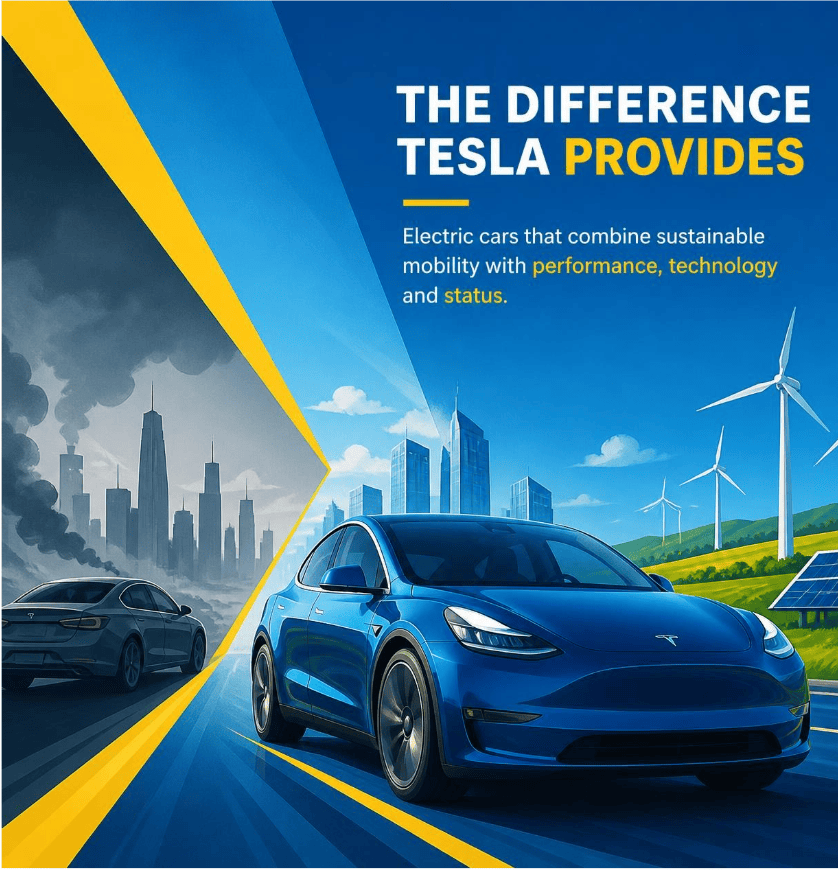
Tesla provides electric cars that combine sustainable mobility with performance, technology and status.
The differentiation included:
- Electric powertrains.
- Rapid acceleration.
- Software-led controls.
- Over-the-air updates.
- Battery and charging technology.
- A direct sales model.
- Integration with home energy products.
Tesla no longer has the electric-vehicle market to itself. Its product advantage has become increasingly relative as established manufacturers improve their own offers.
The lesson is that successful Product Differentiation can change category expectations. Once competitors respond, the original innovator must continue improving the product and reinforcing its brand memory advantage.
Apple: Integrating Hardware, Software and Services
Apple’s products are differentiated less by one exclusive feature than by the integration of the complete system.
The company controls hardware, operating systems, services and much of the user experience. Products are designed to work together, creating practical advantages for buyers who use several Apple devices.
Its implied product proposition is:
Apple provides premium devices that work intuitively on their own and more effectively as part of an integrated ecosystem.
The differentiation is reinforced through:
- Hardware and software integration.
- Device continuity.
- Consistent interfaces.
- Proprietary services.
- Product design.
- Controlled retail and support.
Competitors may offer better individual specifications or lower prices. Apple’s relative product difference comes from the coherence of the overall experience.
Dyson: Making Engineering Visible
Dyson has repeatedly entered established categories with products designed to dramatise engineering differences.
Cyclonic vacuum technology, bladeless fans and distinctive product forms made technical features visible to buyers. Transparent components often helped show how the product worked.
Its implied product proposition is:
Dyson provides premium household products that use visible engineering innovation to improve performance and usability.
Product Differentiation Through Business Models
A business model can differentiate the product by changing how buyers access, pay for or use it.
Dollar Shave Club: Subscription Instead of Replenishment
Dollar Shave Club reorganised razor purchasing around direct delivery and subscription.
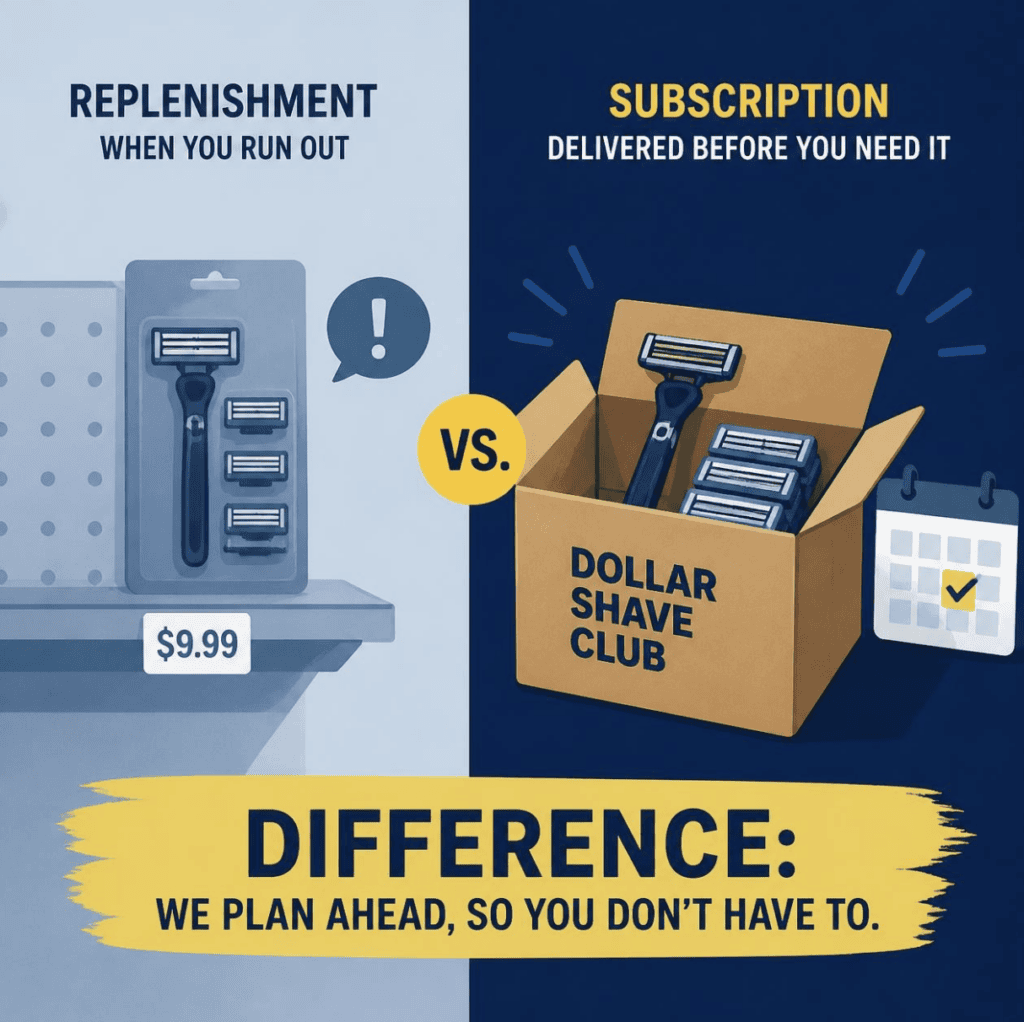
The offer addressed several category frustrations:
- Expensive refill cartridges.
- Complex product ranges.
- Forgetting to replace blades.
- Traditional retail distribution.
Its implied product proposition was:
Dollar Shave Club provides straightforward razors through a predictable and convenient subscription.
The difference came from the combined offer:
- Recurring delivery.
- Simple pricing tiers.
- Direct-to-consumer distribution.
- Lower perceived cost.
- Reduced purchasing effort.
Competitors could copy the subscription model, but Dollar Shave Club had already established a strong connection between the brand and the new buying method.
The example demonstrates that the offer structure can be as important as the physical product.
Salesforce: Software Without Installation
Salesforce challenged enterprise software by delivering customer relationship management through the internet.
Traditional software involved major licence fees, internal servers, installation and periodic upgrades. Salesforce offered browser access, subscription pricing and centrally managed updates.
Its implied product proposition was:
Salesforce provides enterprise CRM capability without the cost and complexity of traditional installed software.
Its “No Software” messaging made the product difference easy to understand.
Software as a Service eventually became standard. However, Salesforce benefited from establishing an early association with cloud-based enterprise software.
Differentiation Through Simplicity and Convenience
Many successful products differentiate by reducing complexity rather than adding features.
Canva: Making Design Accessible
Professional design software traditionally required training, experience and significant financial investment.
Canva simplified the process through templates, drag-and-drop tools and an accessible interface. Users could produce visually credible materials without specialist design skills.
Its implied product proposition is:
Canva enables anyone to create professional-looking visual content quickly and affordably.
The product difference included:
- Templates.
- Simple editing tools.
- Browser-based access.
- Collaboration.
- A free tier.
- A wide range of output formats.
Canva expanded the category by serving people who would not previously have considered themselves designers.
Its freemium model also functioned as distribution. Users could experience the product before paying, reducing barriers to adoption and helping the service spread through teams and organisations.
Product Differentiation Through Price and Offer Structure
Price can support Product Differentiation when it reflects a coherent operating model. Low price alone is easily copied and can damage perceived quality.
Ryanair: Separating the Fare from the Extras
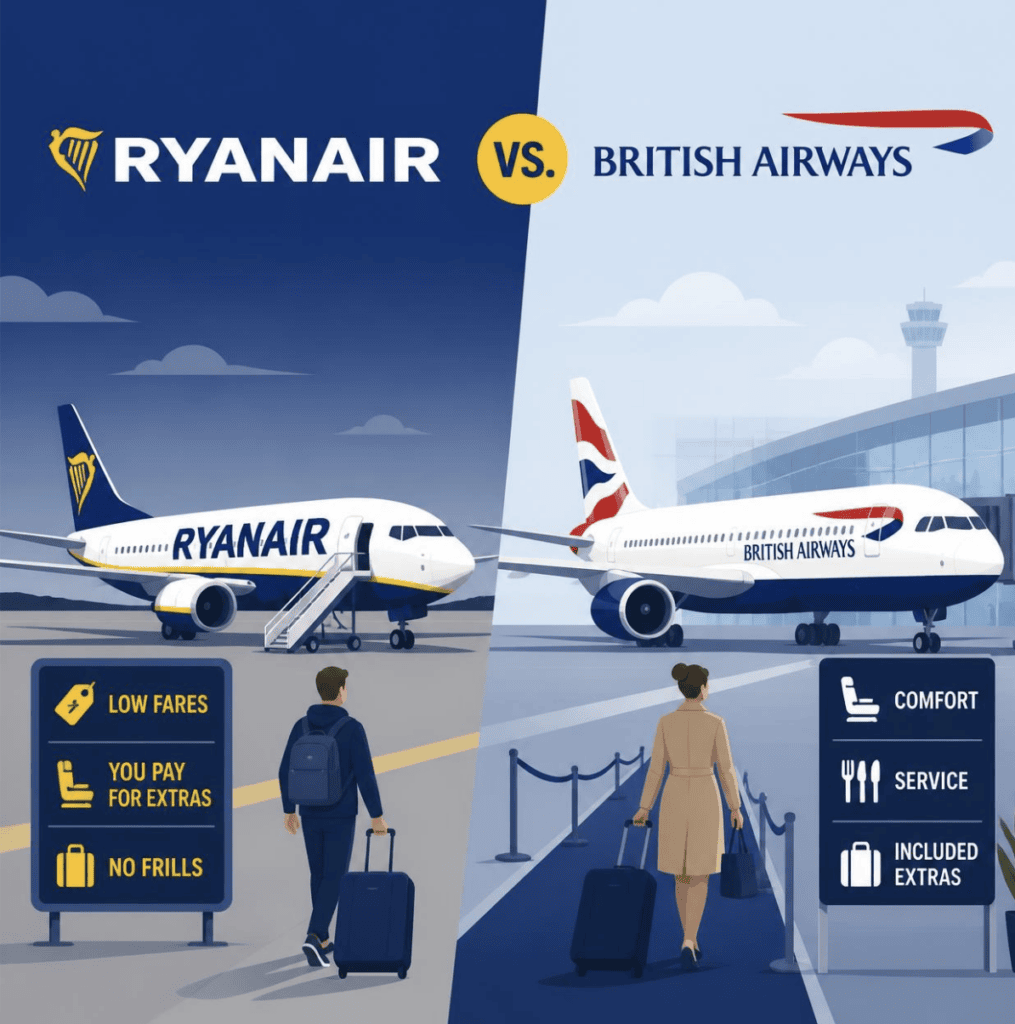
Ryanair designed its offer around a low base fare, with customers paying separately for additional services.
Its implied product proposition is:
Ryanair provides air travel for people who prioritise reaching their destination at the lowest available price.
The offer is supported by:
- Low headline fares.
- Additional charges for optional services.
- High aircraft utilisation.
- Standardised aircraft.
- A stripped-back service.
- Use of lower-cost airports where practical.
The model creates a clear trade-off. Buyers receive a lower price but accept fewer inclusive services and less flexibility.
This attracts price-sensitive customers while alienating people who value comfort or simplicity. That polarisation does not necessarily indicate a strategic failure. Strong Product Differentiation may appeal disproportionately to one buying priority.
Aldi: Simplifying the Supermarket Offer
Aldi’s relative value advantage comes from more than low prices.
Its operating and product model includes:
- A limited range.
- A high proportion of own-label products.
- Smaller stores.
- Simplified displays.
- Operational efficiency.
- Repeated price and quality comparisons.
Its implied proposition is:
Aldi provides reliably good products at lower overall prices by removing unnecessary complexity from grocery retail.
The limited range reduces choice but also simplifies purchasing and lowers operating costs.
Aldi demonstrates that value differentiation is most credible when buyers can understand how the company is able to deliver the price.
Product Differentiation Through Durability and Ownership
Differentiation can continue beyond the initial purchase.
Patagonia: Extending the Product Life
Patagonia’s differentiation includes durable product design, repairs and resale.
Its implied product proposition is:
Patagonia provides outdoor products designed to perform for longer, supported by services that extend their useful life.
Repair and Worn Wear make the durability claim tangible. They also alter the ownership experience by reducing the assumption that damaged products should be replaced.
The product, service model and environmental position reinforce one another.
This illustrates how the boundary between product and brand differentiation can blur. Durability is a product attribute, but the supporting services and values turn it into a broader brand meaning.
Rolls-Royce: Selling Engine Availability
In B2B markets, companies can differentiate by changing what customers are actually buying.
Rolls-Royce’s “Power by the Hour” model shifted aspects of aircraft-engine purchasing towards payment for engine availability and usage rather than the equipment alone.
The value proposition moved from ownership of a complex product towards confidence that the equipment would remain operational.
Its implied proposition was:
Rolls-Royce provides dependable engine capability supported throughout its operational life.
The model aligned the supplier’s incentives with the customer’s need for reliability. It also created longer-term service relationships and recurring revenue.
This demonstrates that Product Differentiation can come from wrapping services, data and performance guarantees around a physical product.
What Strong Product Differentiation Examples Have in Common
Several common principles emerge.
They Solve a Recognisable Customer Problem
Salesforce reduced the burden of installed software. Canva made design easier for non-designers.
The Difference Is Easy to Demonstrate
Tesla’s acceleration, Canva’s templates and Dyson’s visible engineering make the advantage understandable.
A feature that requires a lengthy explanation is less likely to influence low-attention buying decisions.
The Business Model Supports the Claim
Ryanair’s cost structure supports low fares. Aldi’s range and store model support value. Salesforce’s cloud delivery supports subscription access.
The product claim is credible because the organisation is designed to deliver it.
Competitors Are Forced to Respond
Successful differentiation often changes category expectations.
Software companies adopted SaaS. Retailers increased own-label value ranges. Automotive manufacturers accelerated electric-vehicle investment.
The Difference Becomes Connected with Buying Situations
Product advantages contribute to Mental Availability when buyers connect them with Category Entry Points.
Canva may come to mind when someone needs to create a presentation quickly. Ryanair may be considered when price matters more than service. Tesla may be retrieved when a buyer wants an electric car associated with technology and performance.
These links help turn product differences into future demand.
Conclusion:
Product Differentiation creates competitive advantage when it gives buyers a relevant and observable reason to choose one offer over another.
The difference may come from technology, performance, simplicity, price, access or the wider business model. It must be valuable, credible and sufficiently strong relative to competitors.
Over time, successful product features often become category expectations. The organisation must then continue improving the offer, while using brand assets and communications to protect the brand memory structures already built.
Our separate guide to ‘Brand Differentiation Examples’ article explores how customer experience, values, brand stories and Distinctive Brand Assets help companies stand out beyond the product itself.
Further Reading:
Brand Strategy: How to Build Evidence-Led Marketing that Drives Growth
Brand Differentiation: How Distinctiveness Drives Mental Availability and Growth