The role of Brand Awareness
Brand Awareness continues to be important. Clearly, if someone is not aware of a brand, then building useful memory structures around it is difficult. However, in my experience, brand managers are often unsure which type of Brand Awareness they should measure, what each measure tells them and how awareness fits within a wider Mental Availability strategy.
In this article, we explain the main types of Brand Awareness, why Prompted Brand Awareness is the most important foundational awareness measure and why it remains of limited diagnostic value unless it is combined with Mental Availability metrics.
In many organisations, marketers are facing a familiar and frustrating situation. They are working harder than ever, investing in campaigns, refining positioning and running brand health trackers. The reports show healthy levels of awareness and favourability. But high awareness does not guarantee salience when it counts. Favourability does not mean the brand will be chosen.
Many brands find themselves in this uncomfortable position: well liked and well known, but detached from the buying situations that drive demand. When buyers enter the category, the brand is too often absent from consideration. Something important may be missing from the measurement mix, and that something could be Mental Availability.
Mental Availability focuses on the likelihood that a brand will be recalled in real-world buying situations. It provides a practical, evidence-based way to understand why a familiar brand may still be overlooked when it matters most.
This approach owes much to the work of the Ehrenberg-Bass Institute for Marketing Science. Its research has helped shift the focus of brand growth away from loyalty and persuasion alone towards the importance of being easy to think of and easy to buy. Concepts such as Mental and Physical Availability, Category Entry Points and Mental Market Share give marketers practical ways to understand and influence how buying decisions are made.
The Different Types of Brand Awareness
Brand Awareness is often reported as though it were one measure. In practice, there are several types, and each answers a different question.
Top-of-Mind Brand Awareness
Top-of-Mind Brand Awareness measures the first brand named when respondents are asked which brands come to mind in a category.
For example:
“When you think about car insurance, which brand comes to mind first?”
This is a demanding measure because only one brand can be first for each respondent. It can provide a useful indication of which brands dominate general category recall, but it does not reveal the range of brands a buyer could retrieve or the buying situations that prompted the memory.
It may also favour large brands and brands with recent or heavy advertising.
Spontaneous or Unaided Brand Awareness
Spontaneous Brand Awareness measures all the brands respondents can recall without seeing a list.
For example:
“Which car insurance brands have you heard of?”
This usually provides a broader view than Top-of-Mind Awareness because respondents can name several brands. It shows which names are accessible when the category is mentioned.
However, the question still removes the respondent from a real buying context. It asks which brands they know within a category, rather than which brands would come to mind when they face a particular need.
Prompted or Aided Brand Awareness
Prompted Brand Awareness measures whether category buyers recognise a brand when its name is shown to them.
Respondents may be presented with a list and asked:
“Which of these car insurance brands have you heard of?”
Prompted Brand Awareness is normally higher than spontaneous awareness because recognition is easier than unaided retrieval.
Of the traditional awareness measures, Prompted Awareness is the most important foundation for a Mental Availability assessment. It establishes whether category buyers connect the brand with the correct category at all.
A buyer may recognise the name of a company but place it in the wrong category, misunderstand its offer or fail to recognise that it competes in the market being researched. If the brand is not correctly associated with the category, it is unlikely to be retrieved when a relevant buying situation occurs.
Prompted Brand Awareness therefore answers a critical foundational question:
How many category buyers know that this brand belongs in this category?
However, it cannot tell us:
- why the brand comes to mind;
- when it comes to mind;
- how many buying situations retrieve it;
- whether competitors are recalled more strongly;
- whether the brand has broad or narrow relevance;
- whether awareness is converting into purchase opportunities.
This is why Prompted Awareness is essential but insufficient.
Advertising Awareness
Some trackers also measure whether people recall seeing or hearing advertising for the brand.
This can be captured through spontaneous advertising recall or prompted recognition of a particular campaign.
Advertising Awareness may help evaluate campaign reach and attribution, but it should not be confused with Brand Awareness or Mental Availability. A buyer may remember an advertisement without identifying the correct brand. Equally, they may recognise the brand but fail to connect it with a useful buying situation.
Why Prompted Brand Awareness Matters Most
Prompted Brand Awareness is the most useful of the traditional awareness measures because it establishes the pool of category buyers with the potential to form useful memory links to the brand.
If 80% of category buyers recognise the brand as a participant in the category, then the maximum group currently available to build Category Entry Point associations is broadly contained within that 80%.
If Prompted Awareness is low, the brand has foundational work to do. It needs broad reach, clear category cues and consistent Distinctive Brand Assets so that more buyers understand what the brand is and where it belongs.
This is particularly important for smaller brands, new entrants and companies expanding into adjacent categories.
A financial-services brand may be widely known as a current-account provider but have low Prompted Awareness in investments. A food manufacturer may be famous for one category but not recognised as a credible participant in another. The overall brand name may be familiar while category-specific awareness remains weak.
Prompted Brand Awareness should therefore be measured in relation to the category being studied, not simply as general corporate recognition.
However, high Prompted Awareness can create false reassurance.
A score of 90% may show that almost everyone recognises the brand, but it does not show whether those buyers can connect it with “when I need a quick dinner”, “when I want a healthier option” or “when I am planning a family celebration”.
Awareness creates the potential for retrieval. Mental Availability shows whether that potential has been converted into usable memory structures.
Understanding Mental Availability
Mental Availability is built through Category Entry Points: the mental cues or situations buyers use to access brands in memory.
These are real, lived moments:
- “A quick snack after the gym.”
- “Treating myself after a tough week.”
- “Fixing a burst pipe fast.”
- “Something easy for a family dinner.”
- “When I need travel insurance for a skiing holiday.”
Strong brands do not rely on one or two cues. They build broad and fresh memory networks across multiple Category Entry Points.
In our database, brands with broader CEP coverage consistently have higher Mental Market Share: the share of all memory links between brands and Category Entry Points in a category.
This is more useful than awareness alone because it is diagnostic and actionable. It shows which buying situations retrieve the brand, where associations are weak and where competitors may be gaining an advantage.
Awareness tells you that a memory exists.
Mental Availability tells you how useful that memory is when demand occurs.
The Three Building Blocks of Mental Availability
To diagnose and grow Mental Availability, focus on three foundational metrics.
Mental Penetration
What percentage of category buyers can link the brand to at least one Category Entry Point?
If a category buyer cannot make any CEP link to the brand, the probability of purchase is extremely low. In the SmilingCFO database, there is less than a 5% chance of claimed purchase when no CEP association exists.
A brand may have 90% Prompted Awareness but only 50% Mental Penetration. This means many buyers recognise the name but cannot connect it with a reason or occasion to buy.
That gap should concern senior marketers.
Network Size
On average, how many Category Entry Points is the brand associated with among people who know it?
Wider and fresher networks increase the probability that the brand will be retrieved across multiple buying situations.
Network Size is particularly important once a brand has established healthy Mental Penetration. It shows whether the brand’s relevance is broad enough to support further growth.
Smaller brands often have narrow networks because communications repeatedly focus on one proposition or occasion. Building associations across a focused group of relevant CEPs can increase the number of moments in which the brand has a chance to be chosen.
Share of Mind
Are competitors encroaching on the Category Entry Points where the brand holds a Mental Advantage?
Share of Mind is particularly useful for large brands. It helps identify whether competitors are beginning to gain stronger associations in buying situations previously dominated by the market leader.
A brand can maintain high awareness while its relative share of memory declines.
Together, Prompted Brand Awareness, Mental Penetration, Network Size and Share of Mind feed into Mental Market Share: the brand’s overall share of category memory links.
Why Brand Awareness Is Not Enough
Consider two brands with Prompted Awareness of 90%.
Brand A is linked with eight different Category Entry Points among category buyers.
Brand B is linked with only two.
The traditional tracker may report both brands as equally well known. Yet Brand A has more opportunities to come to mind because it is connected with a broader range of buying situations.
The same problem arises when a brand has stable awareness but declining sales. The tracker may suggest that nothing has changed, while competitors have strengthened their associations with high-frequency CEPs.
This explains why brand managers can find themselves presenting healthy brand awareness scores alongside a falling market share.
The relevant question is not simply:
“Do category buyers know us?”
It is:
“When do category buyers think of us, how often, and how does that compare with competitors?”
Why This Matters to the CFO (and the CEO)
Mental Availability is not just a marketing measure. It is a business-growth measure.
When Mental Market Share grows, Sales Market Share tends to follow. When the brand shows a Mental Advantage, (stronger-than-expected associations with valuable Category Entry Points), it has a greater probability of being considered in those situations.
Prompted Awareness still has a role in this commercial story. It identifies how many category buyers recognise the brand as a relevant market participant.
But the more compelling progression is:
Prompted Brand Awareness → Mental Penetration → Network Size → Mental Market Share → Purchase Opportunity
This creates a clearer explanation of how marketing investment builds future demand.
It also helps diagnose where the problem lies.
- Low Prompted Brand Awareness suggests insufficient reach or poor category identification.
- High awareness but low Mental Penetration suggests weak links to buying situations.
- Healthy Mental Penetration but low Network Size suggests narrow relevance.
- High Mental Market Share but weak sales may indicate a Physical Availability problem.
This is significantly more useful than reporting brand awareness in isolation.
Five Steps to Growing Mental Market Share
1. Define the Category and the Buyer
Get this wrong and everything else falls over.
Define the category too narrowly and you may miss new growth opportunities. Define it too broadly and the research becomes difficult to interpret.
Be clear about who the category buyers are, rather than focusing only on the buyers of your brand.
This category definition should also guide the Prompted Brand Awareness question. The aim is to determine whether buyers recognise the brand as belonging to the specific category under investigation.
2. Identify the Right Category Entry Points
Use qualitative research to uncover the personal and situational cues buyers use to enter the category.
Then quantify them:
- Which CEPs are used most frequently?
- How many category buyers use them?
- Which are growing or declining?
- Which brands are currently associated with them?
- Which are credible for your brand?
3. Run a SmilingCFO Mental Availability Assessment
A SmilingCFO Mental Availability Assessment will tell you:
- How many buyers recognise the brand within the category?
- How many can make at least one link to the brand?
- How many links they make on average?
- How the brand compares with competitors on specific CEPs?
- Where the brand has a Mental Advantage or Disadvantage?
- Where white spaces may exist?
If Mental Market Share is lower than Sales Market Share, the brand may be over-relying on distribution, pricing or promotion. That is unlikely to be sustainable indefinitely.
If Mental Market Share is higher than Sales Market Share, the brand may have unrealised potential, with Physical Availability preventing conversion.
This can form a powerful story for Sales teams to take to customers and retailers.
4. Develop a GROW, FIX and DEFEND Plan
GROW by targeting valuable CEPs that are credible for the brand and where no competitor holds a strong Mental Advantage.
FIX weak associations in high-frequency buying situations.
DEFEND existing strongholds by refreshing and reinforcing the links the brand already owns.
The correct plan depends on the diagnosis. A brand with low Prompted Awareness should not jump directly into building a complex network of associations without first ensuring more category buyers recognise it.
5. Review the Measurement Mix
If Category Entry Points do not feature in your tracker, consider rebalancing the metrics.
Jenni Romaniuk suggests that approximately 60% of a Brand Health Tracker should focus on Category Entry Points, 30% on other attributes and 10% on attitudes.
This does not require abandoning historic awareness measures or losing trend continuity. Prompted Awareness should remain as the foundation, with Mental Availability measures added to show whether recognition is becoming commercially useful.
From Insight to Impact
Consider this example: KitKat has an 88% Mental Penetration score thanks to its consistent association with “break time.” This brand idea allows the brand to bridge multiple category entry points, for example, what about “afternoon slump,” “after-school snack,” or “coffee break companion”?
Now imagine you’re a premium beer brand. You may own “celebration” but miss out on “relaxing after work.” If a competitor owns that space, you’ll miss out on valuable occasions, even if people say they like you more when asked out of context of the buying situation.
That’s why we advise clients to not only measure CEP associations but to map them against competitors, so you find CEPs where:
- Many buyers use the retrieval cue
- Few competitors are present
- You have a credible claim
That’s where the growth is likely to be sourced.
Mental Availability Isn’t Just a Marketing Job
Mental Availability is a company-wide opportunity.
Marketers should bring the data into the boardroom and show how Mental Market Share relates to Sales Market Share. Sales teams should understand which Category Entry Points create the strongest commercial opportunities. Media agencies should know which buying situations campaigns are intended to reinforce.
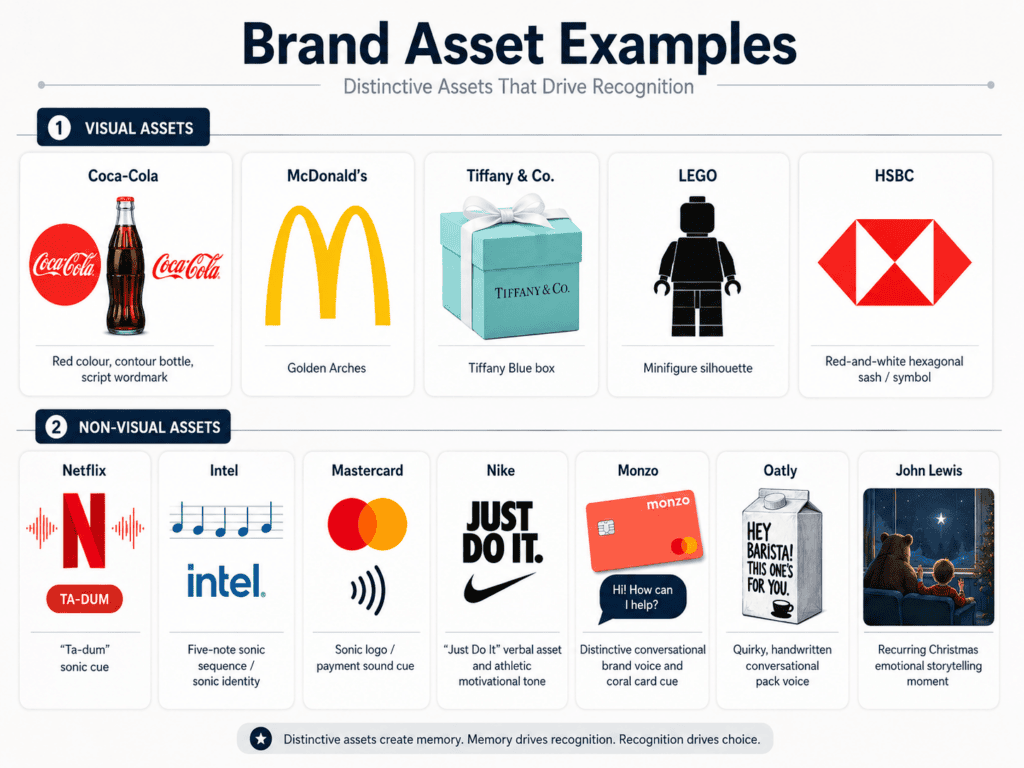
Distinctive Brand Assets should be co-presented consistently with priority CEPs so that communications are both relevant and correctly attributed.
Training is equally important. Too many brand teams have a superficial understanding of the measures included in their trackers. This is not because they lack talent, but because awareness, salience and Mental Availability are frequently used interchangeably.
They are not the same.
- Brand Awareness indicates knowledge or recognition.
- Salience is often used loosely to imply prominence or accessibility.
- Mental Availability measures the probability of retrieval in buying situations.
Clarifying these distinctions improves decision-making across the organisation.
How AI and Mental Availability Together Will Shape the Next Era of Brand Growth
As artificial intelligence changes how marketers gather insights and execute campaigns, Mental Availability provides a strategic lens for ensuring those capabilities remain grounded in what matters: being thought of in buying situations.
AI is accelerating the ability to test creative ideas, analyse customer language, personalise messages and predict behaviour at scale.
However, for AI to create brand value, it needs a clear interpretive framework.
Mental Availability provides that framework by defining:
- which category buyers the brand needs to reach;
- which buying situations matter;
- which associations need to be built;
- which competitors currently dominate those associations;
- how progress should be measured.
The same principles are also increasingly relevant to AI search. Brands need to be clearly associated with the needs and contexts people express when asking questions of AI tools.
The objective remains consistent: to ensure the brand is retrieved at the right time, for the right reason, by the widest possible audience of category buyers.
Conclusion
Brand Awareness remains an important foundation for growth, but marketers need to understand what each awareness measure reveals.
Top-of-Mind Awareness identifies the first brand retrieved in a general category context. Spontaneous Awareness captures the wider set of brands buyers can recall without help. Advertising Awareness shows whether communications have been noticed.
Prompted Awareness is the most important traditional awareness measure because it establishes whether category buyers recognise the brand as part of the correct category. Without that connection, there is little foundation on which to build useful memory structures.
But Prompted Brand Awareness is not an outcome in itself.
A buyer can recognise a brand without being able to connect it with a single buying situation. This is why awareness must be tracked alongside Mental Penetration, Network Size, Share of Mind and Mental Market Share.
Together, these measures show whether the brand is merely known or genuinely easy to retrieve when demand occurs.
At SmilingCFO, we help brand teams put these principles into practice through Mental Availability Assessments. We diagnose the brand’s current position, identify valuable Category Entry Points, benchmark performance against competitors and show where to Grow, Fix and Defend.
The objective is simple: move beyond measuring whether buyers know the brand and understand whether they think of it at the right time.
Further Reading…
Brand Health Tracking: Building Evidence for Mental Availability and Brand Growth
Brand Health: How to Enhance your Brand Health Tracking Without Losing Continuity