Brand Planning should connect what we know about buyers with the choices we make about investment, creativity and commercial execution. My experience as a CMO and Chief Commercial Officer has shaped that expectation: a plan must explain where growth can come from and how the organisation intends to pursue it.
The process needs to raise the team’s ambition while making its commitments more concrete. Which opportunities deserve resources? What are we prepared to change? What needs to happen for the investment to contribute to revenue growth and profit?
Brand Planning should be an efficient and effective way in which these questions become a coherent set of decisions. It should also develop the people who will deliver the plan and give them confidence in one another.
It should be a process that people want to be part of.
Brand Planning Step One: Define the commercial ambition
Start by explaining the growth the business needs and the brand’s contribution to it. A revenue target needs a credible account of how it will be achieved: attracting more buyers, improving distribution, supporting price, changing the product mix and/or developing additional buying occasions.
Each route has implications for margin, investment and operational capacity. Make those implications visible, including what will be required of sales teams, retail partners and other stakeholders.
Be explicit about the trade-offs. If the plan prioritises a new buying situation, identify what will receive less attention and why. Leaders should be able to see the value of the choice alongside its opportunity cost.
Roger Martin describes strategy as connected choices about where to compete, how to succeed and the capabilities required. That is a useful discipline for brand planning: priorities need to fit together and direct the allocation of resources.[1]
SCQuARE’s Pivotal Question adds focus. Having examined the situation and its consequences, define the central question the plan must answer. A clear question gives the team a common task and a basis for judging its proposed response.[2]
Brand Planning Step Two: Establish shared principles for the work
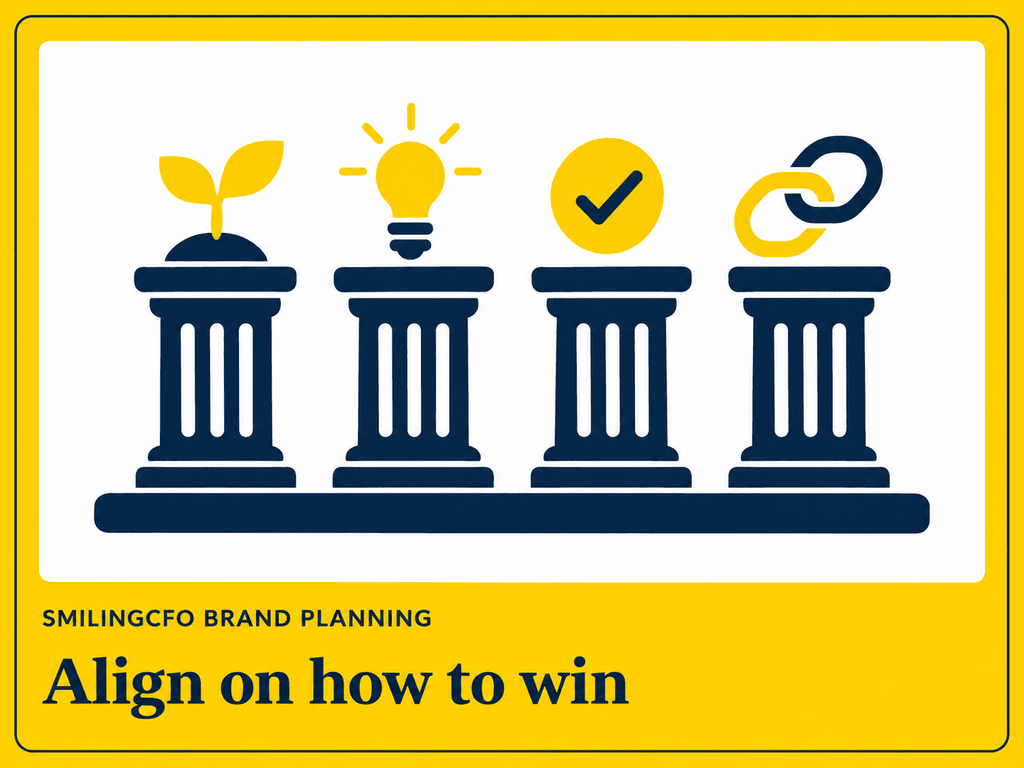
Alignment from the outset on the principles that will guide the Brand Planning process reduces circular debate, keeping everyone focused on the commercial ambition.
- Brand growth. Which evidence and assumptions will guide our decisions about how the brand can grow?
- Creativity. How will we develop and assess ideas, including those that challenge current practice?
- Decision making. Who contributes, who decides and what information is required?
- Trust and commitment. What will each person or function deliver, to what standard and by when? What resources will support those commitments, and what would justify changing direction?
If brand growth depends on reaching more category buyers, the team can assess whether a proposed activity is likely to reach beyond existing enthusiasts. If an idea requires a different investment level, the approval route should already be understood.
Marketing, sales and finance should contribute early enough to shape the choices. Their perspectives help establish what an attractive opportunity would need to deliver and what the organisation can support.
Shared principles also make delegation possible. When people understand the commercial aim, the evidence required and the boundaries of their authority, they have a clearer basis for making decisions without repeatedly reopening the whole plan.
Each person and function must be able to rely on colleagues to deliver their best work to the agreed standard, on time, every time. Leaders should resolve competing priorities, while individuals flag threats early enough to act. As commitments are honoured, people can move forward without repeatedly chasing progress or checking work that others already own.
Brand Planning Step Three: Identify the buying situations to pursue
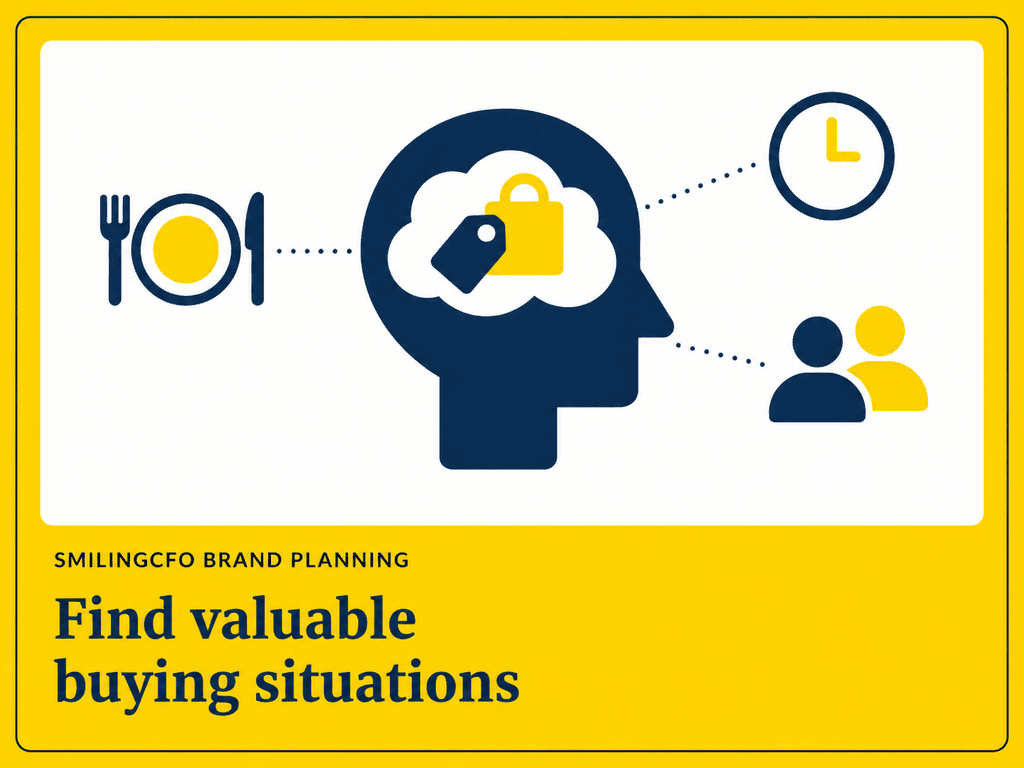
Commercial ambition needs to connect with how people buy. What is happening when they need the category? What are they trying to achieve? Which brands come to mind?
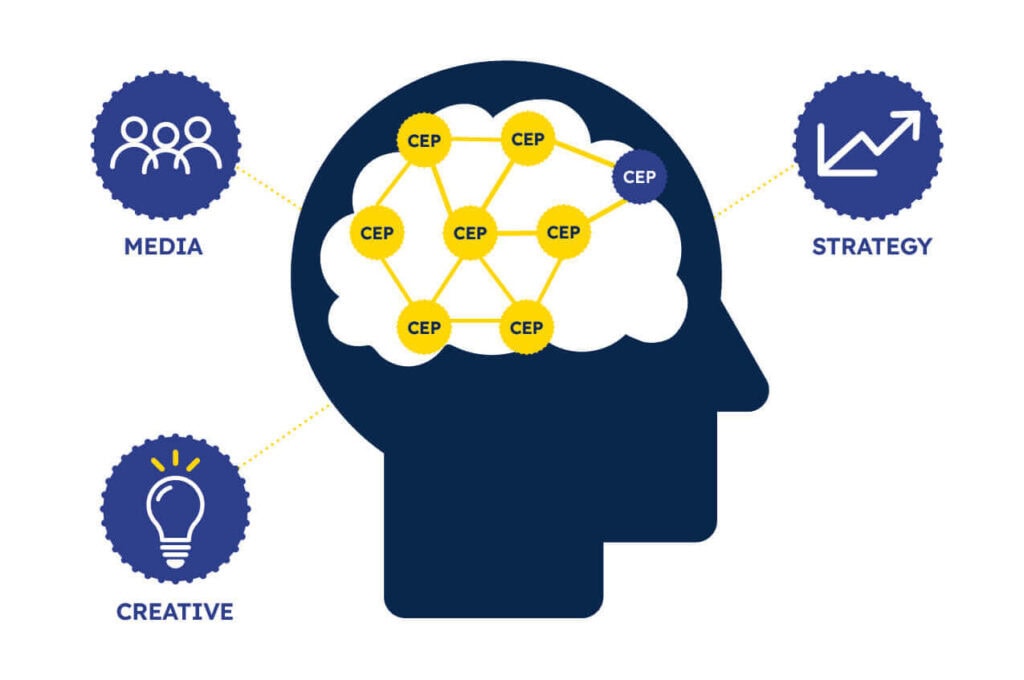
Category Entry Points, or CEPs, are the cues associated with buying situations that help people retrieve brands from memory. They are central to Mental Availability: the likelihood that a brand comes to mind in relevant buying situations.[3]
Start by examining the relevance of each situation, the strength of the brand’s associations and the competitive context. SmilingCFO’s Opportunity Engine is a useful tool that will consolidate where to defend, associations that need to be strengthened and how to expand into new buying situations.
Then assess the commercial opportunity. Can the product meet the need? Can buyers find and buy it? What would distribution, communications or product changes cost? How might the opportunity contribute to profitable growth?
A weak association identifies something to investigate. It takes this wider assessment to decide whether building that association deserves investment. The output should be a deliberate choice of the buying situations the brand will prioritise.
Brand Planning Step Four: Use evidence to fuel the creative ambition
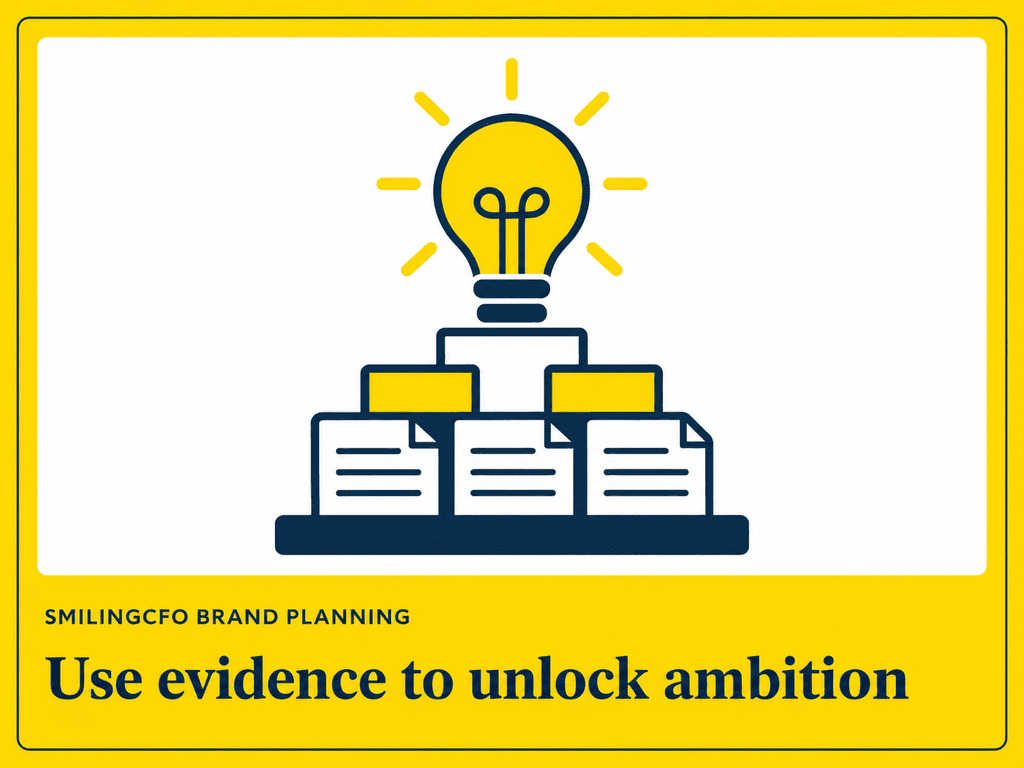
There is a productive ‘Science AND Creativity’ paradox here: a stronger evidence base can give a team greater creative freedom. Understanding the opportunity reduces some of the uncertainty around the task and makes room to explore how ambitious the response could be.
As leaders we must give our teams confidence to act. That requires us to distinguish a reasonable risk from an avoidable one. Define what can be learned before a full commitment, what would trigger further investment and what would cause the team to stop. This gives ambitious ideas a practical way forward.
The creative challenge then becomes more purposeful. People can explore unfamiliar approaches with a shared understanding of the opportunity and the consequences of their choices. Rigour and imagination can reinforce each other throughout the process.
The energy this creates is part of the value of brand planning, and should translate into deeper engagement: people have a stake in the choices and a reason to sustain momentum through delivery.
Brand Planning Step Five: Turn the opportunity into a human brief

A commercially attractive opportunity still needs a compelling human expression. The creative brief should make the buying situation recognisable and establish the role the brand can play within it.
The brief should also explain the behavioural change required. Are we seeking to enter consideration for this occasion, reinforce an existing association or help people choose the brand more readily when shopping?
Consider a frozen potato brand exploring the need to prepare dinner quickly with minimal effort. Picture someone reaching the end of a demanding day. The practical need is speed and convenience. The emotional opportunity might be the relief of knowing that a satisfying dinner is manageable.
Another route could find humour in the distance between the meal someone intended to cook and what the evening allows. These are illustrative possibilities for a creative team to develop, grounded in the same buying situation.
Ultimately, we should be seeking to find culturally relevant ways to build brand associations with key buying situations in a way that causes an emotional response.
Brand Planning Step Six: Give ambitious ideas a route to a decision
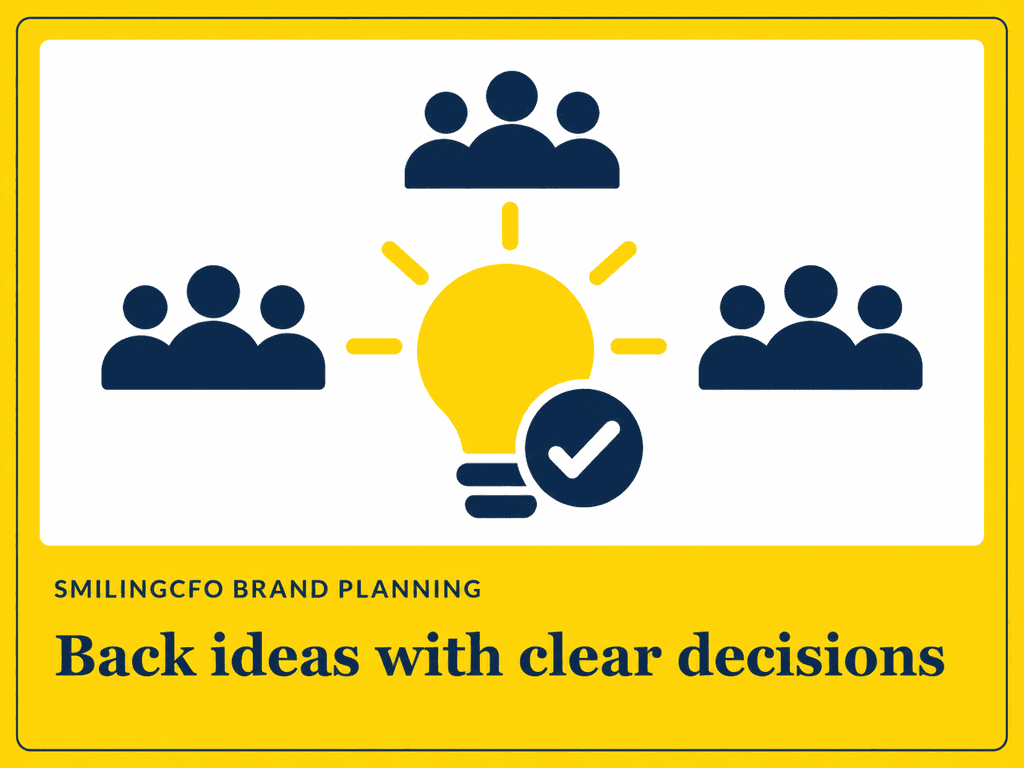
My friend and founder of Beneath the Surface reminds me that “it is one thing being smart enough to spot the growth opportunities, but it is another to have the courage to take the leap to pursue bold ideas!”
Before dismissing an idea because approval looks difficult, establish where the decision belongs:
- Within the team’s authority.
- With central stakeholders.
- With the CEO or board.
For a promising idea that needs escalation, identify a sponsor and prepare the decision properly. Explain the opportunity, investment, principal risks and consequences of proceeding. Where appropriate, propose a limited test that can resolve a material uncertainty.
Creative courage needs the discipline to stop weaker ideas too. Agree assessment criteria before preferences become entrenched, then concentrate resources on the strongest options. A plan must reflect the organisation’s capacity to execute it. Every additional initiative makes a claim on money, management attention and other people’s time.
Brand Planning Step Seven: Build future demand AND sales today
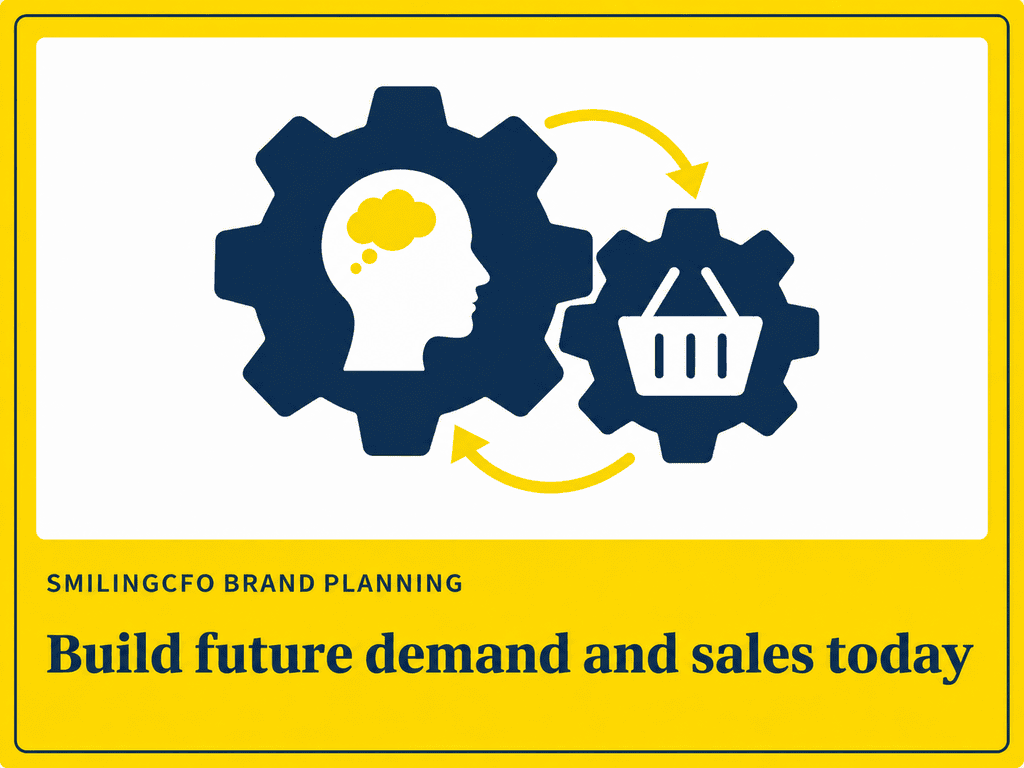
Brand planning has to address both the memories that support future buying and the actions that help people purchase now. Binet and Field’s work on advertising effectiveness highlights the importance of integrating brand building and activation, with measures spanning both time horizons.[5]
Mark Ritson’s two-speed approach to brand planning is a useful way to make these responsibilities explicit. The longer view defines the brand associations to build and refresh, supported by consistent creative ideas and recognisable assets. That direction may extend across several annual plans.[6]
Shorter-term objectives should address current buying opportunities through availability, retail execution, search, promotions and other relevant actions. Their review cycle can respond to changing trading conditions.
The two jobs overlap and should share a commercial logic. A promotion, for example, needs scrutiny of the additional sales it is expected to generate and the margin it consumes. Brand investment needs clear objectives and a realistic evaluation period.
Agree which parts of the plan should remain consistent, and which can respond to a change in trading conditions or when a new opportunity presents itself.
Brand Planning Step Eight: Prepare well and decide at pace
The time invested in planning is a significant commercial resource. Set an explicit ambition for the decisions to be reached and the time required to reach them.
Assemble the evidence, identify the choices, clarify constraints, select priorities, challenge the commercial assumptions and agree the outline plan.
Put those commitments into a timetable showing which decisions depend on which inputs and where work can progress in parallel. For example, finance can test investment assumptions while sales assesses execution requirements and marketing develops the brief. Agree the points where that work must come together. Confidence in colleagues’ quality and timing allows each function to move at pace.
There is no reason why organisations need to continue to allocate six months or more to the Brand Planning process. Markets are too dynamic and resources too precious to warrant more than 4 to 6 weeks for the main structure of the plan to be developed and briefs issued to stakeholders.
Brand Planning Step Nine: Make execution and accountability explicit
Connect the proposed activity to revenue, margin and profit through explicit assumptions. Distinguish what is known from what is being estimated. Review those assumptions alongside the results, so the team can understand when performance calls for a change.
Use measures suited to each task. For example, track associations to priority CEPs alongside commercial outcomes. Assess nearer-term activity through relevant measures such as availability, conversion and incremental sales or profit where these can be estimated credibly.
Develop the people who will deliver the plan
The exciting additional opportunity that exists within the Brand Planning process is how we use it to develop our people. Give people responsibility for an analysis or recommendation that stretches their judgement, with coaching and clear decision boundaries. Ask them to explain their reasoning, hear challenge from other functions and refine the recommendation themselves. Review what they learned as well as what they delivered. Each cycle should leave people able to take greater responsibility and understand how their decisions affect the wider business.
Conclusion
Brand planning should leave the business with a credible route to growth and a team ready to deliver it. Evidence establishes where the opportunity lies; creative freedom gives people a meaningful role in shaping the response. Trust allows them to commit to their part and rely on colleagues to do the same.
As leaders, we should judge the process by the quality of those choices, the results they produce and the capability we build along the way. People should emerge with stronger commercial judgement and the energy to put it to work. Their confidence in the plan and in one another gives the business the ability to act decisively.
Sources and further reading
2. Ross Lovelock — The One Thing You Need to Know, preface, pages xiv–xv
3. Ehrenberg-Bass Institute — Identifying and Prioritising Category Entry Points
4. Ella Ward and Byron Sharp — Three common mistakes in awards entries, IPA
5. IPA — The Long and the Short of It presentation, Les Binet and Peter Field