Effective Marketing Campaigns; The Pivotal Question.
Before approving a campaign, I would ask one question: In which buying situations should this campaign make it easier for category buyers to recall our brand?
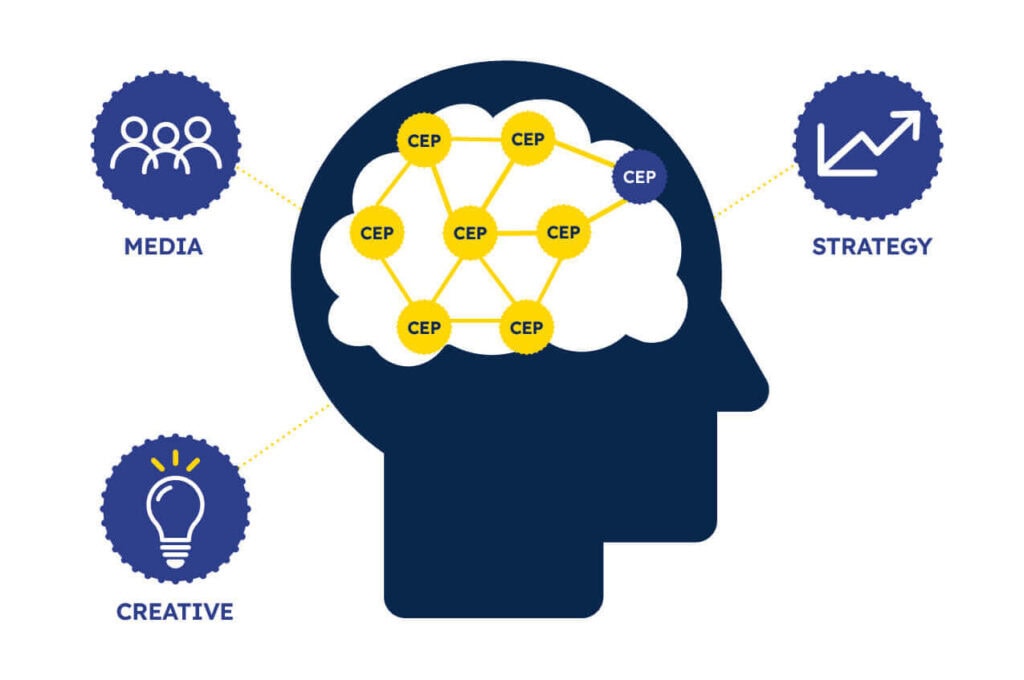
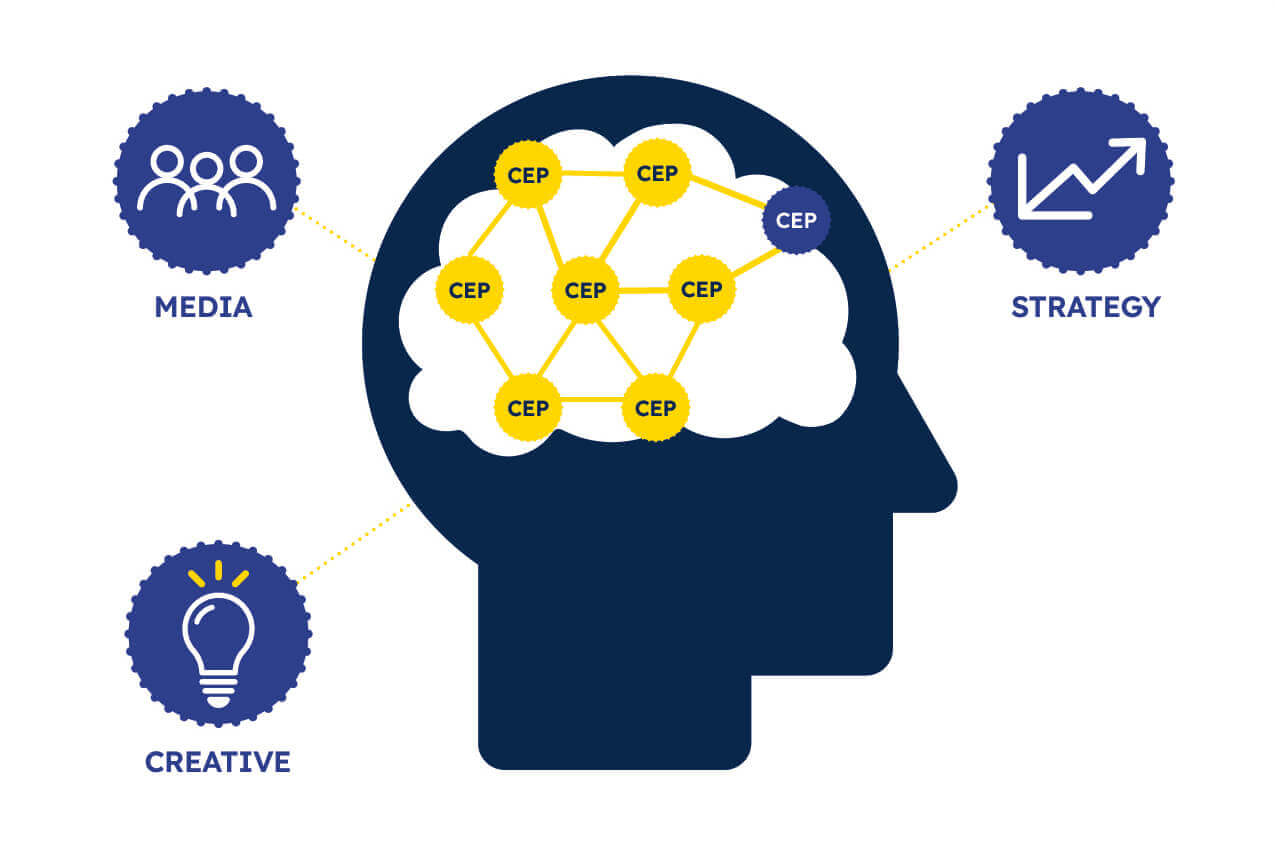
Category Entry Points (CEPs) are the needs, occasions and motivations that prompt people to retrieve brands from memory. Campaigns build Mental Availability by creating and refreshing connections between the brand and these cues.
At SmilingCFO, our assessments span a dozen countries, more than 35 categories and over 700 brands. A recurring pattern is that leading brands have higher Mental Market Share, broader networks of CEP associations and more areas of Mental Advantage.
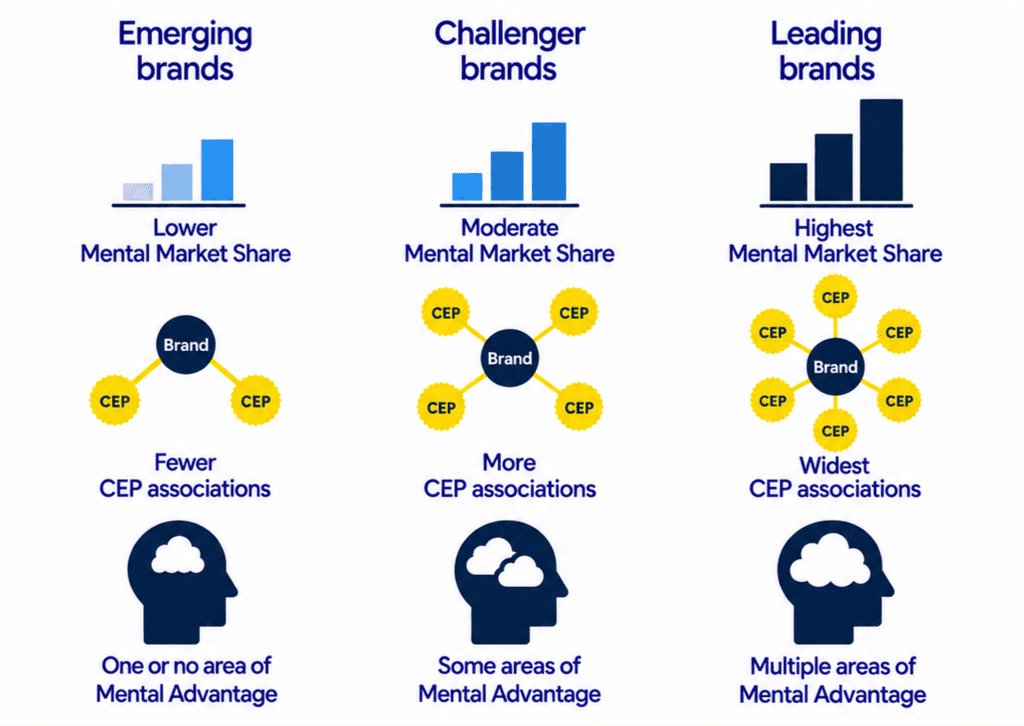
That pattern provides direction, rather than a guarantee that stronger memory alone will deliver growth. The product, price and availability still matter.
For those briefing agencies, the opportunity is to translate the evidence into a shared objective, with a distinct contribution from strategy, creative and media.
Strategy: identify where the brand can credibly grow
For strategy teams, the task is to identify which buying situations offer credible opportunities for growth.
In one SmilingCFO assessment, around three in ten category buyers could not link the brand to a single CEP. Across the combined results, it held just one area of Mental Advantage. Our recommendation therefore addressed two objectives: increase Mental Penetration by helping more category buyers make an association, and expand Network Size by building a broader range of associations.
The more revealing strategic insight concerned the role of the brand’s existing associations.
Authenticity provided credibility, trust and reassurance. However, the research distinguished these qualities from the situations that could trigger consumption. They provided a foundation for extending the brand’s relevance, rather than sufficient direction for a campaign on their own.
The opportunity was to connect that established credibility with recognisable moments when people come together.
Importantly, this direction came from a judgement about what fitted the brand’s story and an assessment of the value of the CEPs, competitive associations, potential spaces where no brand held a Mental Advantage, and the brand’s right to play.
The tip for strategy teams is to examine both what gives the brand credibility and where that credibility could support a wider role. An effective CEP strategy should explain which existing associations to retain, which buying situations to strengthen, and what change in Mental Availability the campaign should seek to achieve.
Creative: give teams a clear memory objective and room to create
CEPs should provide direction without prescribing the execution. The research should help teams understand which buying situations matter, what role the brand can credibly play and which associations need strengthening.
In one SmilingCFO food-category assessment, we grouped five CEPs into a territory called “Make Dinner Happen”. All five sat in the research’s high category relevance and high brand relevance quadrant.
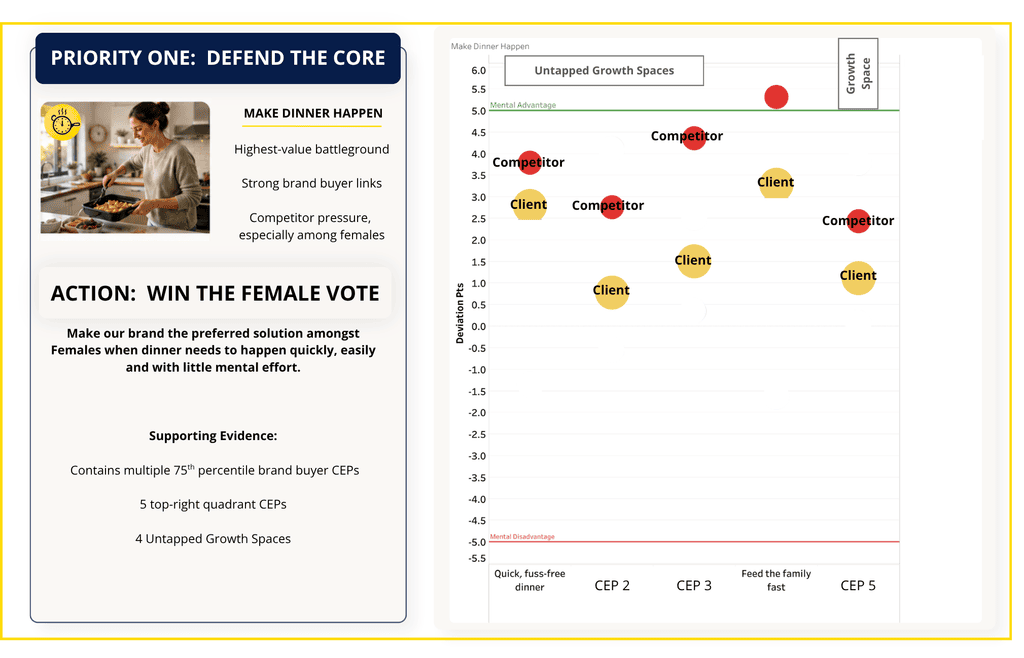
The brand already had strong associations with this territory among its more knowledgeable buyers. Yet across all category buyers, it held no Mental Advantage within it and underperformed with females compared to its competitor. That distinction gave the creative challenge a sharper focus: build on an established role while strengthening the brand’s competitive position in these valuable dinner situations.
WIN THE FEMALE VOTE: Make our brand the preferred solution amongst Females when dinner needs to happen quickly, easily and with little mental effort.
This gives the team a recognisable human situation and a clear role for the brand. It leaves considerable creative freedom.
Possible routes could explore the humour of dinner plans falling apart, the relief of finding a solution after an exhausting day, or the satisfaction of getting everyone fed without a complicated cooking exercise. These are creative possibilities, not executions prescribed by the research.
Individual executions could bring different CEPs to life within the shared territory. Those briefing and reviewing the work would then have a consistent set of questions: is the buying situation recognisable, is the brand’s role clear, and will the execution strengthen the intended association?
Media: connect audience reach to the memories you need to build
For media teams, a useful brief should explain both who needs to be reached and which brand associations the campaign needs to establish, expand or refresh.
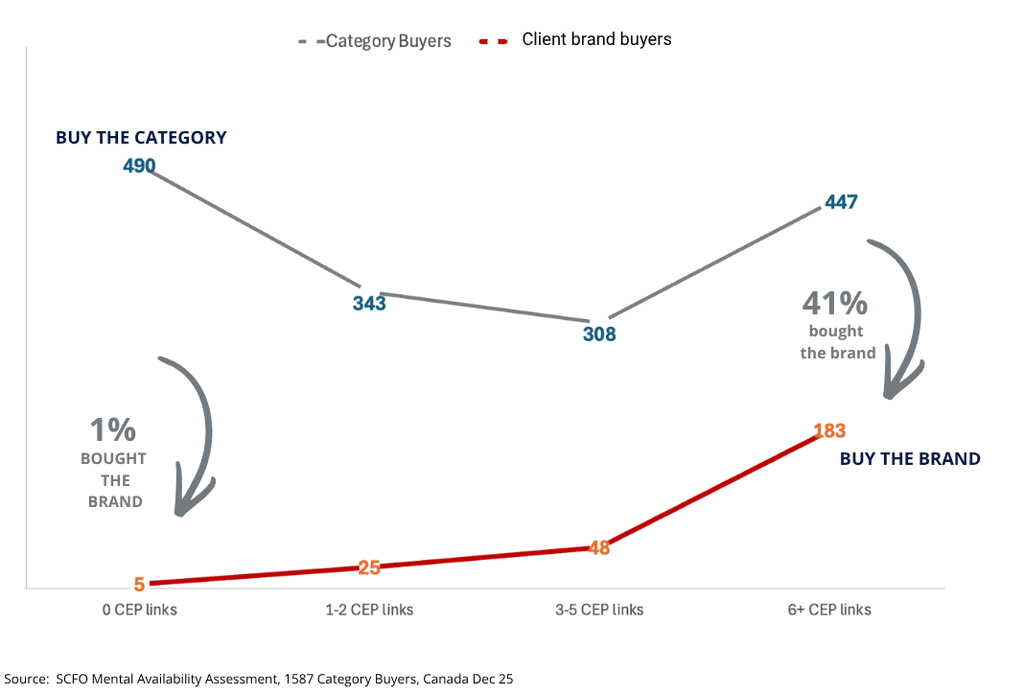
In one SmilingCFO food-category assessment, looking at purchase behaviour alongside the number of brand–CEP associations revealed different communication priorities within the category audience.
For those unable to make a CEP link, the recommendation was to establish an association with the category’s highest-ranked CEP. The same message was recommended for existing buyers with very few associations, helping strengthen a valuable reason for the brand to come to mind.
For those who already linked the brand to a few buying situations, the task was to broaden its range of associations. The proposed communication focus was a territory containing several highly relevant CEPs and two potential untapped growth spaces. This gave planners a set of related occasions to support through the campaign, helping people think of the brand in more situations.
A third group revealed why all non-buyers should not be treated alike. Some could make six or more associations with the brand but still did not buy it. Further analysis showed that they were less likely to associate it with the attribute “great taste” than a key competitor. The recommendation was to strengthen taste perceptions and investigate barriers to purchase. This suggested a more specific communication task than simply building additional associations.
For a media brief, use these distinctions to guide the balance of messages within broad category reach. The brief should specify which associations each execution is intended to build, which audiences particularly need that message, and how the plan will provide sufficient exposure.
Evaluation should connect delivery to the intended memory change: are more category buyers making a first link, are existing networks broadening, and are the specific perception gaps identified in the research closing?
The media brief should connect audience, message and the memory change we intend to measure.
Brand leaders: connect the brief, the budget and the measures of success
The brand leader’s role is to turn the evidence into clear priorities and keep strategy, creative and media working towards the same outcome.
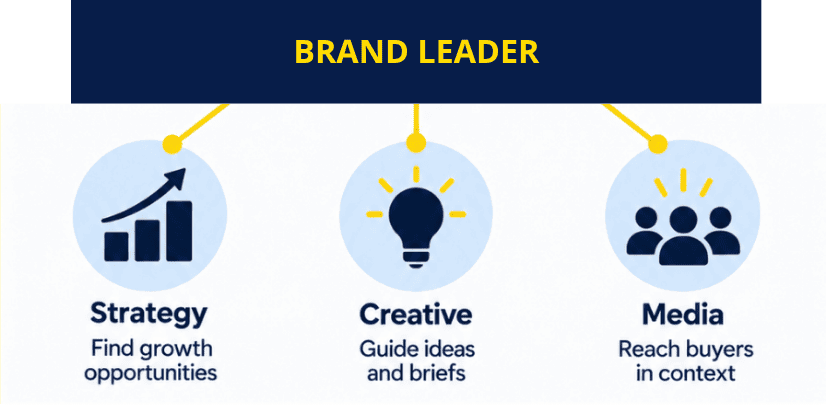
I would bring all three teams together around a shared ‘effective marketing campaign’ brief before creative development and media planning begin. Agree the priority buying situations, the evidence supporting the brand’s role and the change the campaign should seek to achieve. Where there are several objectives, make deliberate choices about their relative importance and how the budget will support them.
A shared objective should give each team clear direction while preserving its freedom to contribute.
Strategy should explain why the opportunity deserves investment.
Creative should make the buying situation recognisable and the brand’s role memorable.
Media should show how those executions will reach category buyers broadly, including people who do not currently choose the brand.
Review these contributions together. A creative idea should be considered alongside the audience it needs to reach and the conditions in which it will be seen or heard. Equally, a media plan should explain how its delivery supports the intended memory change.
Agree the measures of an effective marketing campaign, using the assessment as a baseline. Track Mental Penetration where the objective is to help more category buyers make a first association, and Network Size where the task is to broaden existing associations. Examine the priority CEPs and specific perception gaps alongside Mental Market Share to understand progress relative to competitors. Review buyers and non-buyers separately, rather than relying solely on the overall result.
Finally, consider those changes alongside campaign delivery, purchase behaviour and commercial performance. Where people already associate the brand with several situations but still do not buy, investigate what else may be holding them back, including product experience, price and availability.
For me, the question at the start of this article should remain central throughout the process:
In which buying situations should this campaign make it easier for category buyers to recall our brand?
The brand leader’s responsibility is to ensure the strategy, the creative work, the media investment and the evaluation all answer that same question.
Further Reading
Mental Availability: A Strategic Guide for Brand Leaders
Brand Consistency Examples: How Consistent Assets Build Recognition