Market Orientation is the discipline of viewing the category, the customer and the brand from the outside in. It requires marketers to replace internal assumptions with evidence about how buyers behave, what they need, which alternatives they consider and how they actually perceive the brand.
This sounds obvious, but it requires a fundamental change of perspective. People working inside an organisation know more about its products, strategy and internal language than almost any customer ever will. That knowledge creates bias. Teams can easily mistake what they want buyers to think for what buyers genuinely think, or assume that internal priorities are equally important to the market.
Mark Ritson describes Market Orientation as one of the central concepts of marketing. His recommended “180-degree swivel” asks organisations to turn away from their internal view and look back at themselves from the customer’s perspective. The marketer’s role is to bring that external perspective into the organisation before strategy and tactics are decided. (Marketing Week)
Market Orientation is a structured process of gathering and interpreting evidence about:
- category buyers and non-buyers;
- customer needs and buying situations;
- competitors and alternative solutions;
- category dynamics and future sources of demand;
- the brand’s relative strengths and weaknesses;
- the commercial and organisational capabilities available to respond.
This evidence forms the diagnosis from which Brand Strategy should be developed.
Why Brand Strategy Should Start With Market Orientation
A good Brand Strategy should identify where growth will come from, which problems need to be fixed and where the brand must defend itself from competitor incursion.
These decisions cannot be made reliably from internal opinion.
Ritson’s planning sequence is clear: diagnose the market using data, make strategic choices and only then determine the tactics required to deliver them. Diagnosis comes first because strategy without an accurate understanding of the market is little more than a set of assumptions.
The diagnostic stage should look beyond general awareness or preference. It needs to establish how likely the brand is to be recalled in relevant buying situations, how buyers perceive it and where competitors hold an advantage. This is where a Mental Availability Assessment becomes a foundational part of the process.
Market Orientation Starts With the Category, Not the Brand
A common weakness in brand planning is that the organisation begins with its own brand.
Teams review last year’s communications, discuss performance, examine customer feedback and decide what the brand should say next. Competitors and customers may appear in the process, but only as supporting context.
Market Orientation reverses this order.
The first task is to define the category from a buyer’s perspective. This includes understanding the range of products, services and alternatives buyers may consider when trying to solve the same problem.
The category may be broader than the organisation’s conventional reporting structure. A bank may compete with specialist investment platforms, payment services and financial technology businesses. A supermarket may compete with convenience stores, restaurant delivery platforms and subscription services. A business-software provider may compete with spreadsheets and manual processes as well as named software brands.
Starting with the category creates a more realistic view of demand. It also reveals that the alternatives customers consider are not always the competitors management teams discuss internally.
The next step is to define the category buyer. This should normally be broader than the brand’s existing customer base or a narrowly constructed target segment. Brand growth usually requires the recruitment of more category buyers, including light buyers and people who do not currently choose the brand.
The Brand Strategy pillar is explicit that an effective growth strategy should recruit more category buyers, build Mental and Physical Availability and create commercially actionable plans that sales and finance teams can support.
Understanding Real Buying Situations
Market Orientation should go beyond asking what customers want from a category. It should identify the real-life situations that create demand.
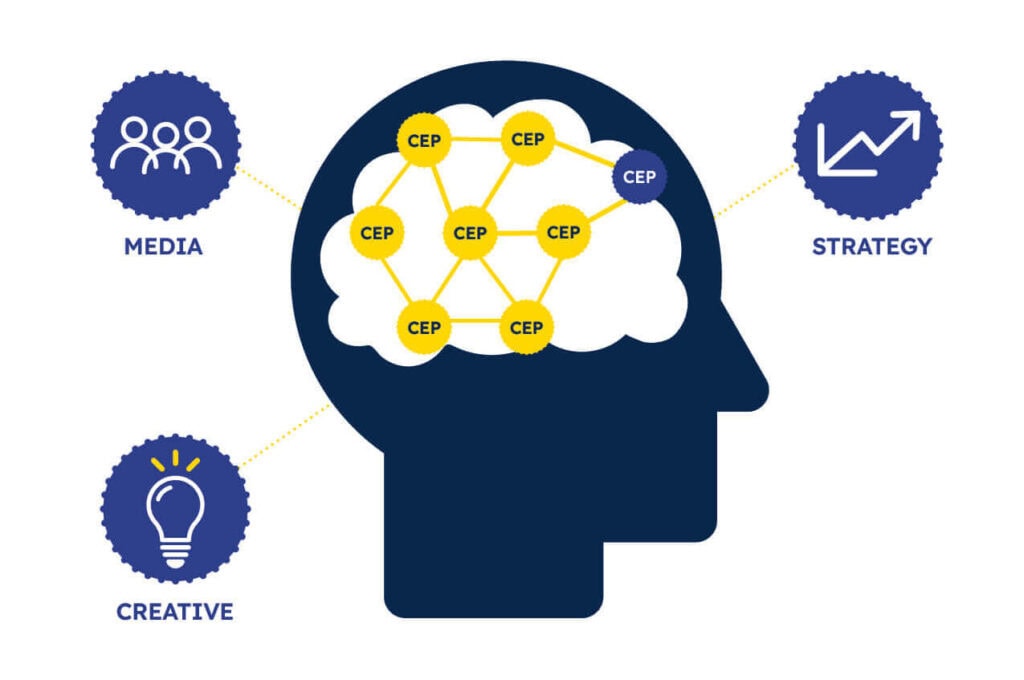
Category Entry Points are the needs, occasions, problems, motivations and contextual cues buyers use to enter a category and retrieve possible brands from memory.
A Category Entry Point might be:
- when I need an easy meal after a long day;
- when I want a snack to keep me going between meetings;
- when I need to remove a stain quickly;
- when I am planning a family holiday;
- when something breaks and I need urgent help;
- when I want to reward myself after a difficult week.
These buying situations exist independently of any particular brand. The marketer’s task is to understand which occur most frequently, which matter commercially and which brands buyers already connect with them.
This is important because awareness alone does not tell the organisation whether its brand will be retrieved when a purchase need occurs.
Mental Availability is the propensity for a brand to come to mind in buying situations. Buyers do not hold brands as isolated names; they connect them with occasions, needs, emotions, users, price expectations and attributes. When a relevant context occurs, those links influence which brands are retrieved.
Market Orientation therefore provides more useful questions than “What do customers think of our brand?”
It asks:
- What causes buyers to enter the category?
- Which buying situations account for the greatest demand?
- Which brands come to mind in those situations?
- Where is our brand easier or harder to recall than competitors?
- Which associations are credible for us to build?
- Which customer needs are being missed by the current offer?
The answers help identify where future growth is most likely to come from.
Looking Beyond Existing Customers
Customer data is valuable, but a Market Orientation process should not be built only around existing customers.
Current buyers normally know more about the brand, hold more associations and have more experience of its products. Their feedback can help explain retention, satisfaction and usage, but it provides an incomplete view of growth.
Non-buyers and light buyers reveal whether the brand is building future demand.
A brand may perform strongly among loyal customers while remaining mentally unavailable to most category buyers. It may have high satisfaction but low Mental Penetration, (the proportion of category buyers who can link it with at least one buying situation).
Market Orientation should therefore include:
- current buyers;
- light buyers;
- lapsed buyers;
- competitor buyers;
- category buyers who know but do not purchase the brand;
- people using alternative solutions.
This broader view reduces the risk of optimising the business around the preferences of its most engaged customers while failing to recruit new ones.
Competitor Orientation and Relative Performance
Market Orientation also requires a realistic view of competitors.
A score has limited meaning when viewed in isolation. Forty per cent of buyers associating a brand with convenience may sound positive until the analysis shows that three competitors score above 60%.
Similarly, a modest association may represent a meaningful relative advantage if no competitor performs strongly.
This is why a SmilingCFO Mental Availability Assessment compares the brand against the competitive set. It identifies:
- high-value Category Entry Points;
- heavily contested buying situations;
- areas of Mental Advantage;
- areas of Mental Disadvantage;
- white spaces where no brand holds an advantage;
- credible opportunities for the brand to pursue.
Relative performance sharpens strategic decisions.
An area of Mental Advantage may need to be defended. A valuable but weak association may need to be fixed. A credible white space may provide an opportunity to grow. Other areas may be too crowded or too distant from the brand’s current image to justify investment.
The resulting strategy becomes more focused because it identifies what the brand should not pursue as well as where it should invest.
From Market Orientation to Brand Diagnosis
Once the market, category buyers, buying situations and competitors are understood, the evidence can be converted into a clear Brand Diagnosis.
A useful diagnosis should answer five questions:
- How does the brand currently secure its sales?
Identify the buyers, occasions, channels and products driving performance. - Where does the brand hold an advantage?
Assess Mental Availability, brand image, assets, distribution and commercial capability relative to competitors. - Where is the brand vulnerable?
Look for declining associations, weak non-buyer penetration, competitor encroachment or over-reliance on price and distribution. - Where are the credible growth opportunities?
Identify valuable Category Entry Points, unmet needs, underdeveloped products or physical availability gaps. - What prevents the brand from converting demand?
Consider retrieval, product experience, pricing, availability and organisational execution.
Turning Diagnosis Into Strategic Hypotheses
Market research produces evidence. Strategy requires interpretation.
The second step in the Brand Strategy process is to develop hypotheses that explain the patterns emerging from the diagnosis.
Examples might include:
- The brand is losing share because competitors are becoming linked with a wider range of everyday buying situations.
- Mental Availability is strong, but poor Physical Availability is preventing the brand from converting demand.
- The current communication is reinforcing an existing strength but failing to broaden Network Size.
- The brand is well known among existing buyers but has weak Mental Penetration among non-buyers.
- A high-value Category Entry Point provides an opportunity because no competitor currently holds a Mental Advantage.
- The intended positioning is not being translated into the associations held by category buyers.
These hypotheses should be treated as explanations to test, rather than conclusions selected to support a preferred plan.
Additional research, behavioural data, sales evidence or market testing may be needed before deciding how to act.
Setting Precise Brand Strategy Objectives
A strong diagnosis makes it possible to replace vague objectives with precise choices.
“Grow awareness” is rarely sufficient.
Market Orientation may instead produce objectives such as:
- increase the number of category buyers who link the brand with at least one buying situation;
- widen Network Size by developing associations with six priority Category Entry Points;
- defend the brand’s Mental Advantage in a core occasion;
- strengthen a high-value association where the brand currently underperforms;
- improve distribution in channels where Mental Market Share exceeds Sales Market Share;
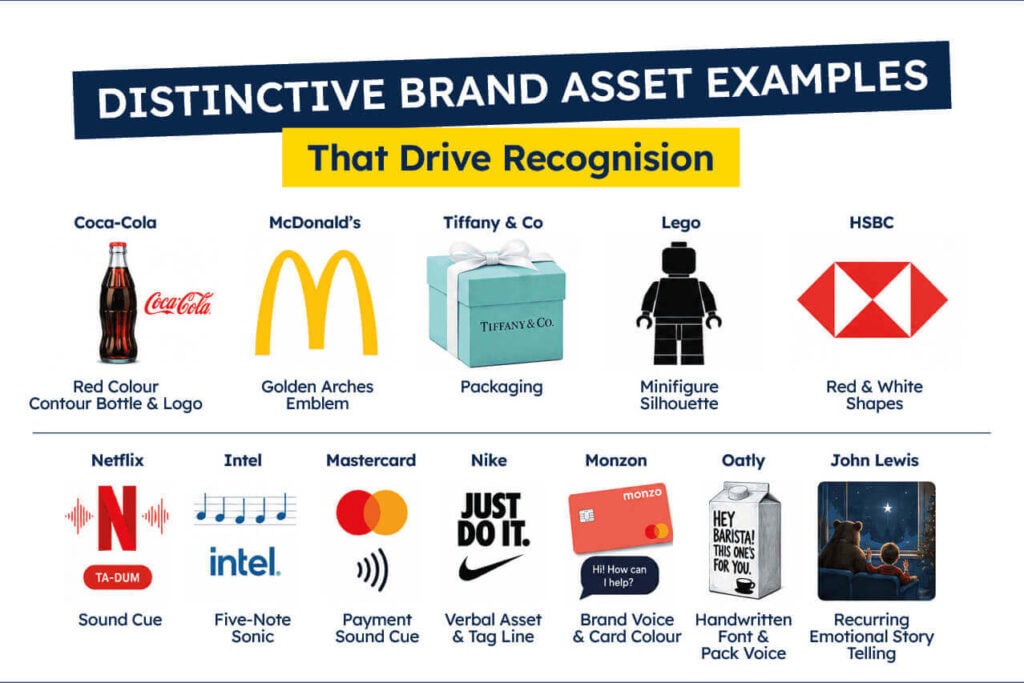
- reinforce Distinctive Brand Assets so communications are correctly attributed;
- reduce dependence on promotions by strengthening the brand’s relevance across more buying situations.
The SmilingCFO Brand Strategy structure organises these choices as Grow, Fix and Defend. Market Orientation identifies the evidence behind each objective, making it easier for the Board, CFO and commercial teams to understand why investment is required.
Market Orientation Is an Ongoing Management Discipline
Market Orientation should not be confined to the annual planning process.
Categories change. Competitors enter, customer behaviour evolves and new technologies alter how buyers discover, evaluate and purchase brands.
A market-oriented organisation builds regular diagnosis into a continuous learning loop:
Diagnose → Develop hypotheses → Set objectives → Execute → Measure → Diagnose again
Ritson similarly presents planning as cyclical: the organisation returns to diagnosis to understand whether the strategy worked and how the market has changed.
How SmilingCFO Supports Market Orientation
A SmilingCFO Mental Availability Assessment provides a practical starting point for a more market-oriented Brand Strategy.
The process begins with the category and its buyers rather than the brand’s internal assumptions.
We identify:
- the Category Entry Points used most frequently by category buyers;
- low-value buying situations that should receive less attention;
- where the brand holds Mental Advantage;
- where the brand has Mental Disadvantage;
- how competitive each valuable buying situation is;
- white spaces where no brand holds a clear advantage;
- whether the brand has a credible right to play;
- a focused list of six or more Category Entry Points to guide strategy.
The analysis then shows how the brand performs relative to competitors through measures such as Mental Market Share, Mental Penetration and Network Size.
This turns Market Orientation into a practical set of strategic decisions.
The brand team can see where to grow, what needs to be fixed and where investment is needed to defend established strengths. Creative and media partners receive clearer briefs. Commercial teams gain evidence they can connect with distribution and sales. Senior leaders receive a more credible explanation of how brand investment will contribute to growth.
Conclusion: Market Orientation Shows You Where to Focus
Market Orientation is the first step in Brand Strategy because effective strategic choices depend on an accurate diagnosis of the market.
It requires the organisation to make the 180-degree turn described by Mark Ritson: to stop viewing the market through the assumptions of the people who make and market the product and start looking back at the business from the perspective of category buyers.
That means understanding the category, the alternatives buyers consider, the situations that create demand and the relative position of the brand in memory and in market.
Category Entry Points and Mental Availability make this process more actionable. They show whether a brand is likely to come to mind, where competitors hold an advantage and which buying situations could provide credible opportunities for growth.
The result is a Brand Strategy built in the correct order:
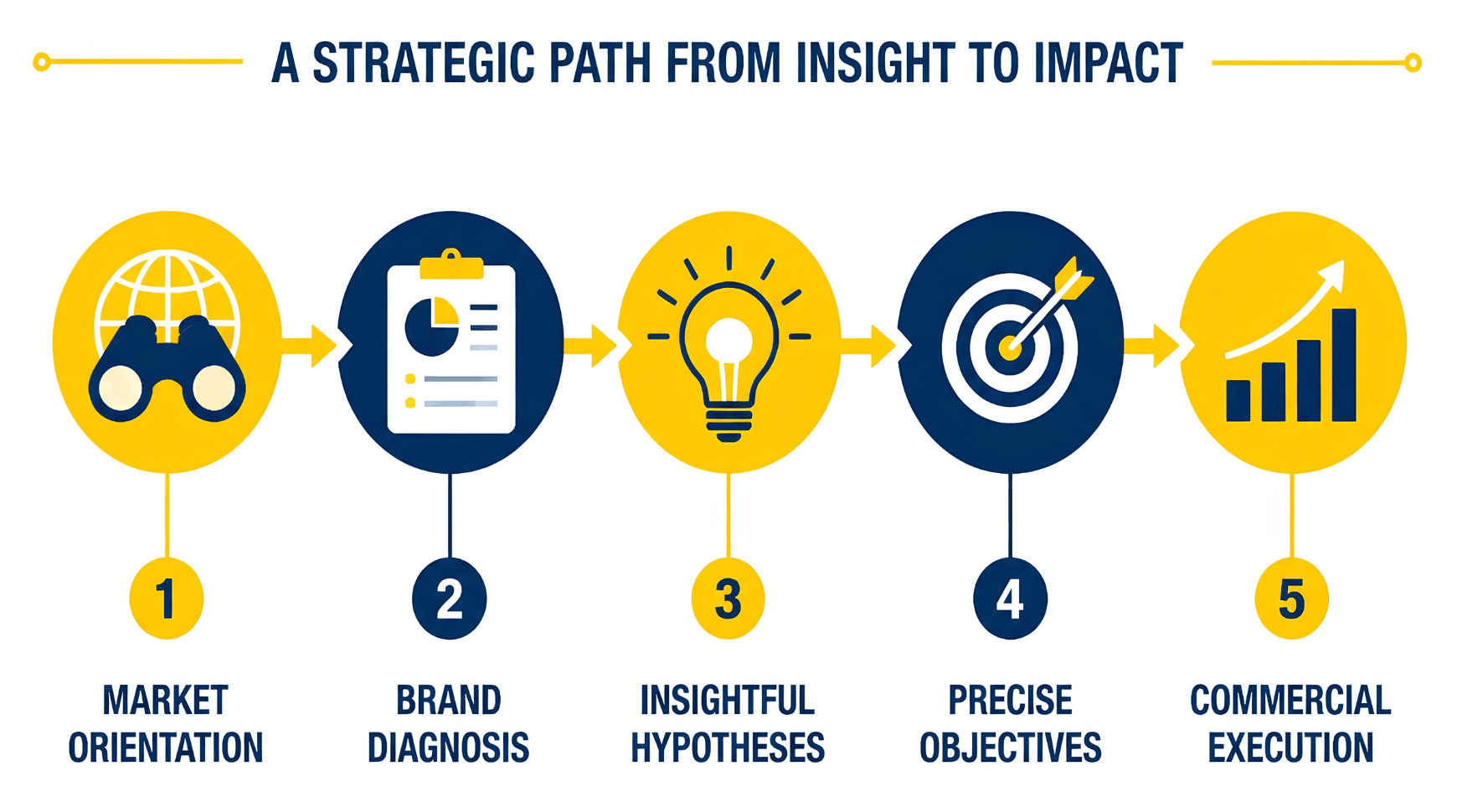
Market Orientation → Brand Diagnosis → Insightful Hypotheses → Precise Objectives → Commercial Execution
Without Market Orientation, brand strategy risks becoming an internal statement of ambition. With it, marketers can build plans grounded in real customer demand, competitive evidence and commercial opportunity.
That is how Brand Strategy moves from opinion to evidence—and shows the organisation where to focus and how to win.
Further Reading:
Brand Health Tracking: Building Evidence for Mental Availability and Brand Growth
Brand Health: How to Enhance your Brand Health Tracking Without Losing Continuity