What are Distinctive Brand Assets and Why They Matter Now
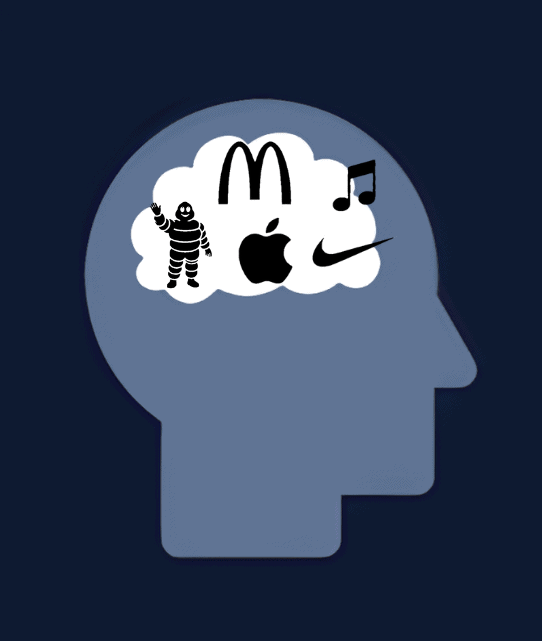
Distinctive Brand Assets (DBAs) make it easier for buyers to retrieve a brand from memory.
These assets are built over time, are most effective when tapping into all five human senses and should be applied consistently, ideally in the context of buying situations to strengthen brand associations with key CEPs.
You might have heard them referred to as “Brand Codes” (Mark Ritson), or “Fluent Devices” (System1). Distinctive Brand Assets, explained brilliantly by Professor Jenni Romaniuk in her book “Building Distinctive Brand Assets” are the non-name elements of the brand that make up the brand’s identity and trigger the brand into the memory of category buyers.
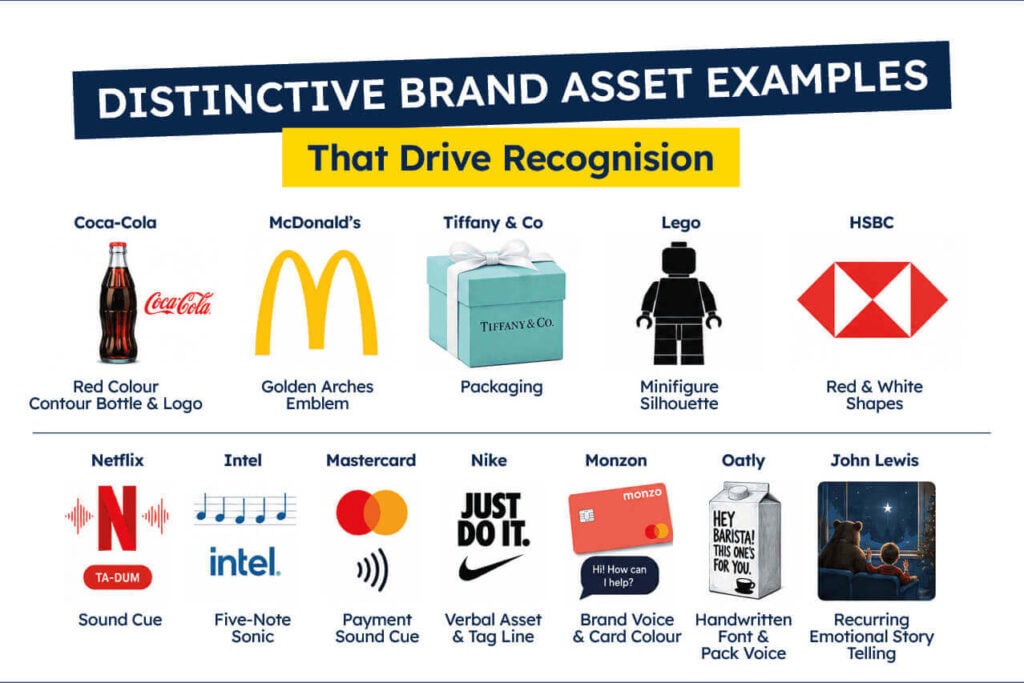
Examples of assets include, colour, logo, character, pack shape, sonic device or a tagline.
These mental shortcuts are particularly useful in making the brand easy to recognise in cluttered environments, whether that be on shelf or online.
Distinctive Brand Assets vs Brand Identity: Getting the Definitions Straight
Not every element of brand identity qualifies as a distinctive brand asset; it must be both recognised and uniquely linked to the brand. In her book Professor Romaniuk introduces two core tests:
Fame (how many people recognise it)
Uniqueness (how strongly they link it to only your brand)
The output of this test enables a small set of assets to be prioritised.
The intent of this article isn’t to repeat what is already in the book, but instead to focus on the practical application, exploring the challenges and offering solutions to help all brand owners utilise a full set of distinctive brand assets.
The Commercial Danger of Boredom
Distinctive Brand Assets should be approved and protected by the Board. This facilitates continuity and consistency, avoiding the temptation to change unnecessarily.
In my experience, Board members like to see the latest creative campaigns, but few are viewing them in the context of the investment being made and the DBA’s being used.
The return on spend, in the short and long term is dependent on the brand being recalled in multiple buying situations. This means co-presenting the brand’s distinctive assets in the context of high-value category entry points to as many buyers of the category as the budget allows.
A CMO is the ultimate guardian of the brand, responsible for passing it on to their successor in a stronger position than when they assumed leadership. As guardians of the governance of an organisation, the Board should ensure the brand assets are being consistently applied and Mental Availability is tracked as a key business metric.
Don’t underestimate how easy it is to be distracted in the pursuit of much needed growth. There is always a financial argument with attractive short-term gains that can be made to justify a retailer collaboration that dilutes brand assets, or a sponsorship that achieves commercial objectives yet doesn’t reinforce the desired brand memory structures. I always described myself as a pragmatic commercially orientated CMO, so I get the temptation, but as I will highlight in the next section, if you can align on the Distinctive Brand Assets at the most senior level, the long-term prize is worth pursuing.
Embedding Distinctive Brand Assets: Why Guinness is Best in Class
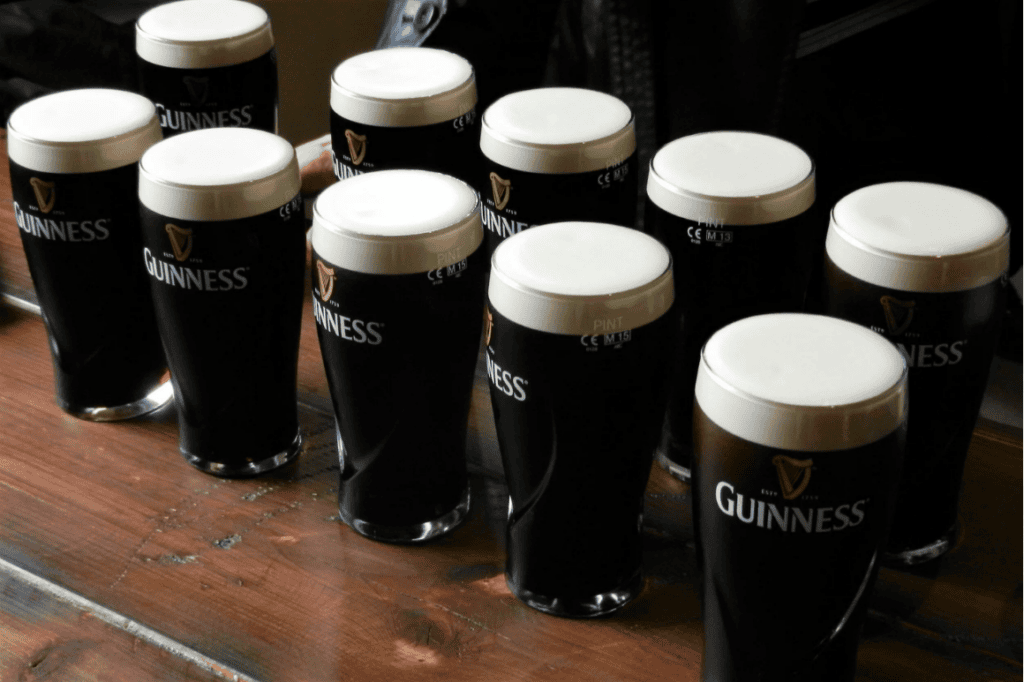
Many Distinctive Brand Assets case studies will include Guinness in its range of examples, for good reason, but few highlight the extensive infrastructure put in place to deliver a consistent product experience every time a pint is poured. Unlike a canned product, in a bar, the product leaves a keg stored in a cellar, often many meters away from the point of dispense, pumped through pipes, through the tap and into the pint glass. Many things can go wrong on this liquid journey so Diageo invests £millions in technicians and equipment to train bar staff, service equipment and monitor quality, to ensure the beer always tastes as good as those in the picture.
If you work for Guinness, sell Guinness, buy Guinness or are just aware of Guinness you are united in the knowledge of what the brand should look like and most importantly should not look like.
Now reported to be the #1 beer brand in the UK On-Premise this achievement goes way beyond the marketing team being guardians for the brand, this responsibility lies with everyone in Diageo, but through decades of significant financial and operational investment, this sense of guardianship is felt by bar owners and consumers alike.
As Mark Ritson says, (MarketingWeek), once you have executed DBA’s / Brand Codes consistently for decades you can be playful to build even greater attention and engagement as Diageo demonstrated brilliantly with their “welcome back” campaign post-lockdown. The marketing campaign launched by AMV BBDO London in May 2021 celebrated the reopening of indoor pubs and hospitality venues across the UK, capturing ordinary everyday objects that resembled a pint of Guinness.

Building a DBA Roadmap for the Next 2-3 Years
The Guinness example can either be inspiring or daunting, or most likely both. So let’s break this down to realistic actions that can form a ‘Distinctive Brand Assets Playbook’ for the next few years.
Identifying potential distinctive brand assets:
This is a time when it does make sense to focus on buyers and find out what cues prompt the brand in their minds.
If available, it’s also a great idea to explore the history of the brand for assets. This review of the archive can help stimulate brand stories and future creative, which can be powerful, but ensure you evaluate the DBA’s equally using the methodology outlined in ‘Building Distinctive Brand Assets.’
Compile everything from characters to colours and move to quantitative research to measure the Fame and Uniqueness of each asset.
Fame measures the extent to which the asset is associated with your brand.
Uniqueness measures whether the asset is only linked to your brand.
The Ehrenberg Bass 4-box grid shown below guides you to how best to select the assets.
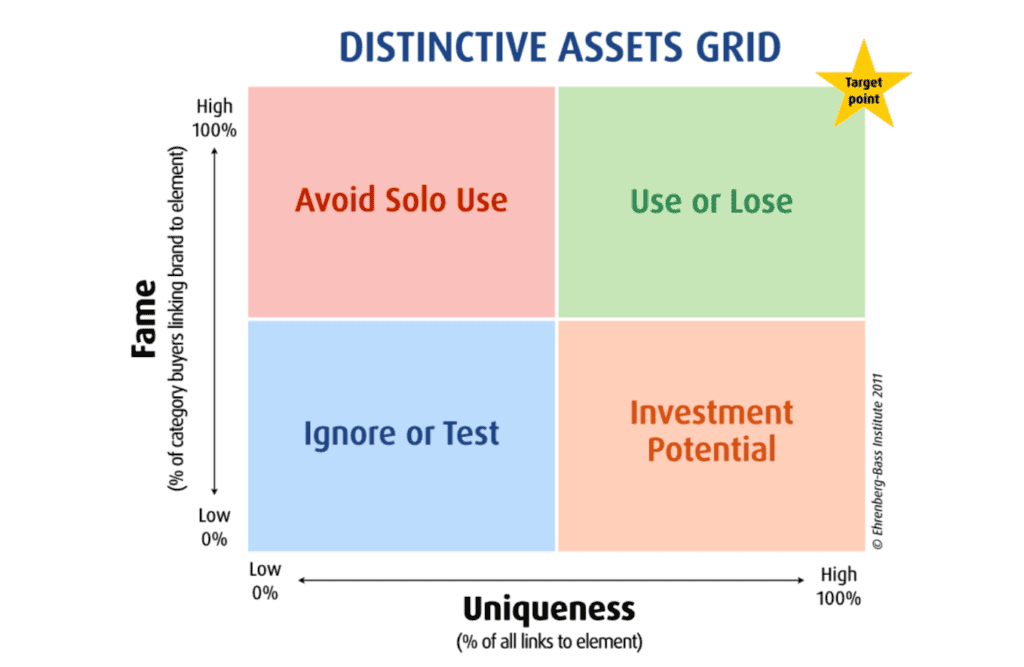
Ideally you will land on 4 or 5 assets that score highly for Fame and Uniqueness that you are prepared to invest in consistently for the long-term.
Communicate the Distinctive Brand Assets to ALL Stakeholders:
This is different to communicating an updated logo or packaging design. These tweaks keep things fresh and give a good reason to talk about the brand to sales teams and retailers for example, but despite claimed “increased propensity to purchase numbers” dubiously gathered in research, brand identity changes are unlikely to grow the brand. If done badly, they can of course negatively impact performance, but more on that later.
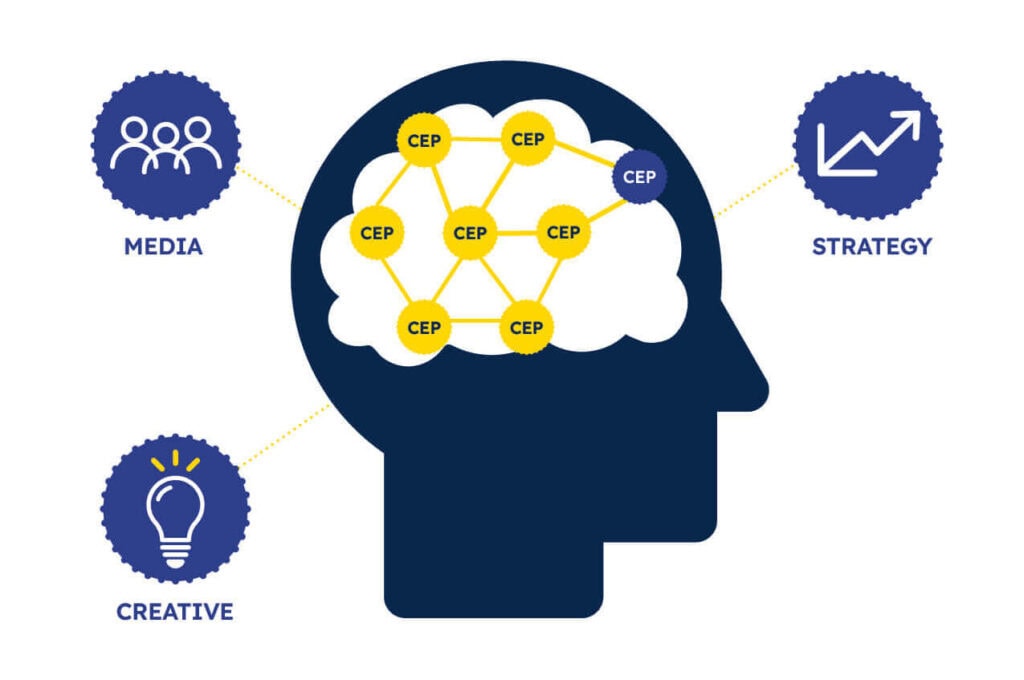
When communicating Distinctive Brand Assets it should be done in the wider context of Category Entry Points and Mental Availability.
Insights Hub: Mental Availability
“One of the Ehrenberg-Bass Institute’s major contributions was to flip marketer attention from what the brand evokes (brand image) to what evokes the brand (mental availability). But after brands are noticed or brought to mind there is often some evaluation, some choice between options, and here brand image can play a role.” – Byron Sharp LinkedIn 2025
This reframing presents the opportunity to anchor the protection and consistent application of DBAs to commercial benefits.
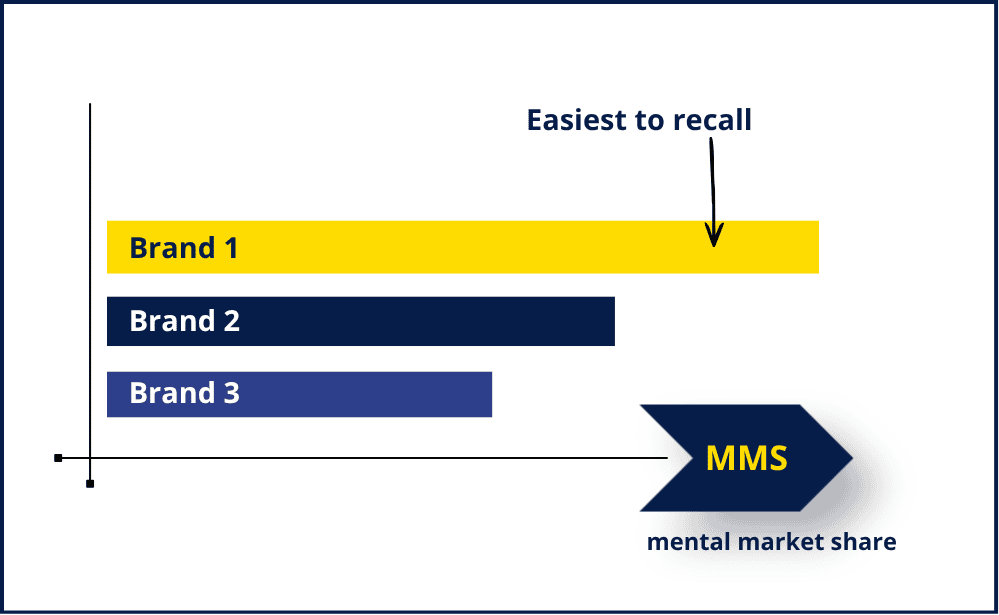
Co-presentation of a brand’s distinctive assets in the context of category entry points and reaching as many buyers of the category as possible is likely to increase Mental Availability. The primary metric for Mental Availability is Mental Market Share (MMS). There is a correlation between MMS and Sales Market Share, which means you can start to quantify the role of the DBA’s.
Application of Distinctive Brand Assets Across All Touchpoints:
“The Brand Looks Distinctive On My Desk”.
Let’s start with the basics. When your assets combine to create your packaging, what does it look like on shelf?
Have you checked it in a large grocery store where the brand is competing for attention with hundreds of products?
I was lucky enough to live and work in Canada for 5 years and with the exception of some global brands who consistently apply their distinctive assets, for the first year, completing my weekly shop took ages. I had very few memory structures to work with because I hadn’t been exposed to the Canadian brands until my arrival. It was fascinating how little the brand name or logo aided my selections, it was more likely to be the types of packaging materials, the colours and the cues consistent with the category norms that registered in my memory.
To this day, I don’t know what my favourite Nachos were called, but I treated myself to the large brown bag every month!
Do you have a budget allocated to create and apply the DBAs so that within the time period of this playbook, the 4 or 5 core assets are visible at every touchpoint?
This is easier said than done. Making the changes to advertising is easy, but changing factory signage or branding on trucks is not cheap and is sometimes swerved. I still see trucks for a well known beer displaying brand assets that were removed elsewhere 10 years ago!
How will the brand assets be applied when running a promotion on-pack?
You want the promotional message to stand out to recruit new buyers, but at the same time you need to make it easy for existing customers to find it whilst being in what Phil Barden (Decoded) describes as ‘auto-pilot’. The fast, automatic, subconscious part of the brand.
In a perfect world, one of your distinctive assets is a character, and you can use the character to convey the promotional message in the design. If not, and implementing the promotion means impacting the DBAs then ask yourself how important it is to run the promotion. It is well-documented that across a longer period of time that most promotions fail to deliver incrementality, but I recognise there will be times when customer relations mean a promotion is necessary. This is where it becomes critical that you have already communicated the benefits of investing in distinctive brand assets to all stakeholders paving the way for collaborative discussions where customer, sales and brand objectives can be met.
Schtop! Another Beer Case Study.
Grolsch, the Dutch beer brand is a really interesting case study when it comes to the creation and application of distinctive brand assets.
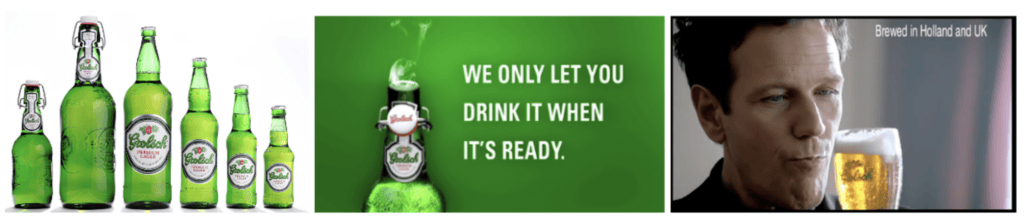
If Grolsch had run a Fame/Uniqueness test in the early 2000’s I would wager that the Swingtop bottle was the brand’s most distinctive asset.
The issue was that this beautiful bottle was expensive to make and therefore hard to build profitable volume. That impacted the number of buying situations where the brand was experienced. Grolsch therefore needed a wider set of assets it could utilise. To improve purchase availability, a range of bottles were introduced that retained the green and embossing of the iconic bottle, whilst in the on-premise a new branded glass was widely distributed to customers free of charge.
Meanwhile the team introduced a new brand spokesperson who would become known for his Schtop! interventions in the “we only let you drink it when it’s ready” campaign, a nod to the fact Grolsch was brewed for longer than other brands.
This set of assets combined with fun creative that sparked a positive emotional reaction to the brand and an energised sales team resulted in several years of growth.
Unfortunately the Grolsch brand is much smaller now, partly due to the ownership and routes to market, but I would suggest also due to the dismantling of these assets over time.
Tracking Mental Availability not Distinctive Brand Assets
Think of strong Mental Availability as the output and DBAs as an input. As already explained, consistent and relentless execution of the assets is key, alongside the identification and targeting of the most valuable category entry points. Do these two things well and you will grow Mental availability, which in turn is likely to translate into growth.
Mental Availability theory flips how we measure success. Instead of asking “Do they know us and like us?”, it asks “Do they think of us when it matters?”
SmilingCFO data shows that brands are chosen not just because they are known, but because they come to mind in multiple buying situations. Without strong and widespread associations across multiple Category Entry Points, a brand risks being overlooked. These associations can’t be built without a set of distinctive brand assets placed alongside these CEPs.
Integrating concepts like Mental Availability into existing brand tracking frameworks and taking the opportunity to question some of what is currently being measured will move you forward.
Conclusion
Distinctive Brand Assets are memory-building tools that help category buyers recognise, recall and choose the brand in the moments that matter.
The strongest brands do not leave this to chance. They identify the assets that are already famous and uniquely linked to the brand, they protect them, and they invest in applying them consistently across advertising, packaging, retail, digital, sales materials, promotions and the product experience itself.
This is why Distinctive Brand Assets should not sit only within the marketing department. They require senior-level alignment, Board-level protection and cross-functional execution. Sales, shopper, trade, packaging, operations, agencies and commercial teams all have a role to play in ensuring the brand shows up consistently and distinctively wherever buyers encounter it.
When distinctive assets are repeatedly co-presented with the Category Entry Points that matter most, the brand becomes easier to think of, easier to spot and easier to buy.
The practical recommendation is therefore clear;
i) Identify the 4 or 5 assets with the greatest potential. Measure them properly for Fame and Uniqueness.
ii) Build a 2–3 year playbook for how they will be used. Apply them relentlessly. Resist unnecessary change.
iii) Track Mental Availability as the output, not just asset recognition as the input.
Done well, Distinctive Brand Assets become a repeatable system for building memory, increasing recall and improving the brand’s chance of being chosen across more buying situations.
Further Reading
Mental Availability: A Strategic Guide for Brand Leaders
https://smilingcfo.co.uk/insights-hub/mental-availability/category-entry-points/