Innovation Strategy: Introduction
There must be a problem with the majority of innovation strategies.
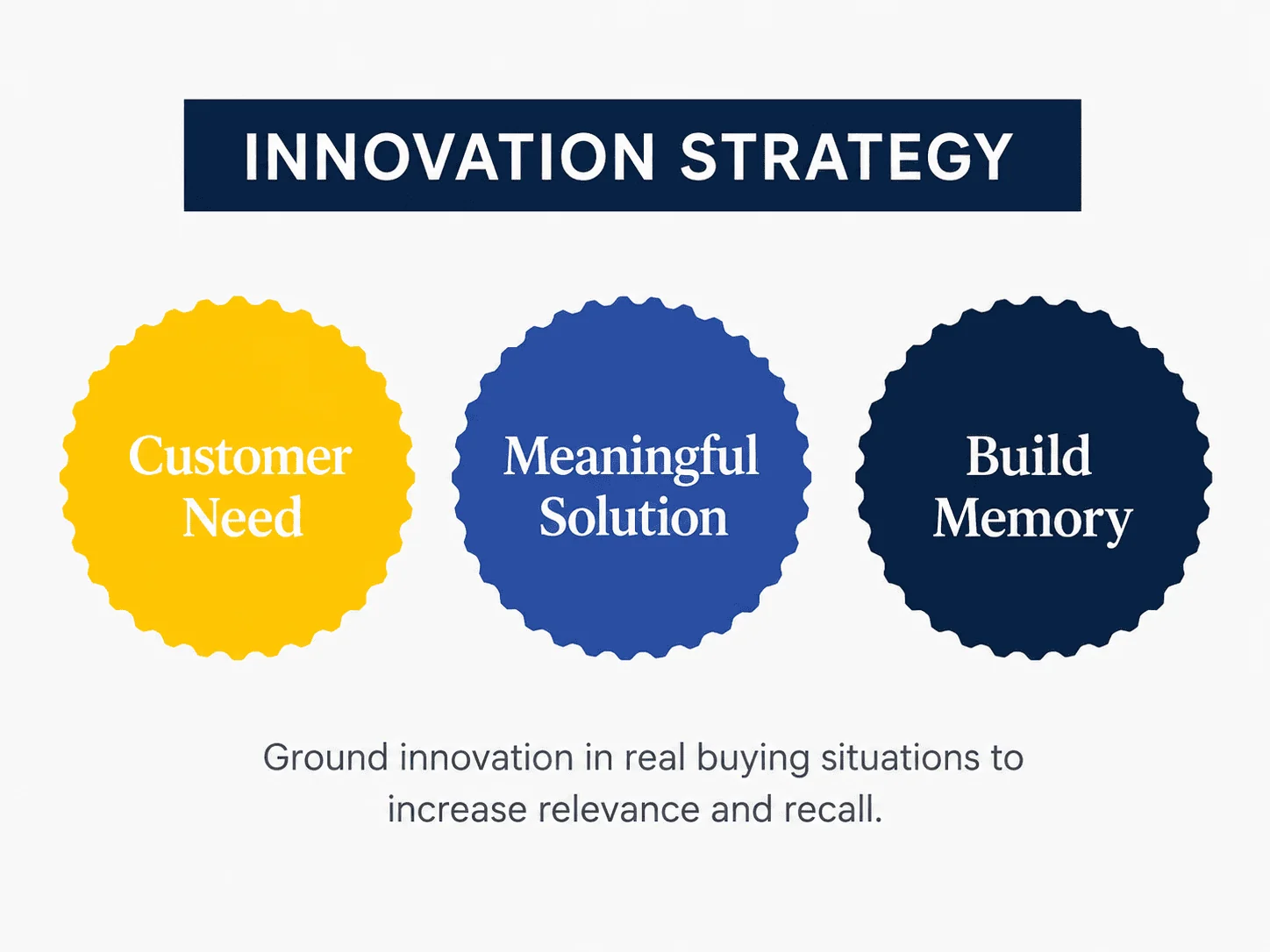
NielsenIQ has stated that more than 85% of new consumer products launched nationally fail, although its wider analysis also shows that innovation is not automatically doomed: 52% of new products that achieve national distribution increase sales in their second year. The difference lies in whether businesses identify a meaningful opportunity, develop an offer that delivers against it and support the launch long enough to build demand.
Poor product differentiation is part of the problem, but innovation also fails when organisations focus too heavily on internal ideas, technological possibilities or a desire to launch something new. Products can perform exactly as designed and still struggle because they do not connect with a recognisable customer need or buying situation.
Without a deep understanding of the situations, needs and cues that drive consumer choice, even technically strong products can fail to gain traction.
This is precisely where Category Entry Points provide value within an Innovation Strategy.
By identifying the occasions and triggers consumers actually use when making decisions, CEPs give innovation teams a sharper lens for selecting and prioritising ideas. Instead of building products that answer questions nobody is asking, brands can design innovations that fit naturally into buying contexts that already exist.
The most successful Innovation Strategy examples often share this quality. They help customers make progress in a familiar situation, even where the product or technology used to solve the problem is new.
Why Some Innovation Strategies Succeed
Innovations designed with Category Entry Points in mind are likely to have a higher chance of success. By aligning new products with the cues and contexts that drive buying behaviour, brands increase the likelihood that their innovations will be relevant at the moment of need.
This does not mean every innovation must reproduce an existing product. It means the new idea should have a clear role in the customer’s life.
Apple’s launch of the iPhone provides a useful Innovation Strategy example. The technology was new, but the device combined three activities consumers already understood: making phone calls, listening to music and accessing the internet. Apple presented these functions through one multi-touch device, making the innovation easier to understand and connecting it with several established needs. The first iPhone reached one million sales 74 days after its US launch.
The iPhone did not succeed simply because it was technologically advanced. Its Innovation Strategy brought together existing behaviours within a product that felt easier, more useful and more desirable. Over time, it also created and expanded buying situations around mobile photography, navigation, entertainment, payments and communication.
This illustrates an important principle:
Innovation can change behaviour, but it still needs to give buyers a clear and accessible route into the new behaviour.
Category Entry Points help provide that route.
Why Category Entry Points Improve Innovation Success
By aligning new products with the cues and contexts that drive buying behaviour, brands increase the likelihood that innovations will be recalled at the moment of need. This makes them more relevant, more retrievable and ultimately more likely to gain traction in the market.
At the same time, building innovations around CEPs can strengthen a brand’s Mental Availability. Each new association created through innovation adds another link in the consumer’s memory network, making the brand easier to recall across a wider set of occasions.
Over time, this cumulative effect increases the probability of the brand being considered and chosen in more buying situations.
It is possible to track this by measuring Network Size, a metric introduced by Professor Jenni Romaniuk. Network Size calculates the average number of Category Entry Point associations held among category buyers with knowledge of the brand.
The SmilingCFO database shows that brands with a high Network Size also tend to have higher penetration than brands with a low Network Size. Innovation can contribute to this growth when it gives buyers additional credible reasons to retrieve the brand.
For example, a food brand strongly associated with family evening meals might develop an offer designed for “when I need a quick lunch while working from home”. If the new product, packaging, availability and communication consistently reinforce that context, the innovation can broaden the brand’s memory network.
CEPs also help organisations make smarter choices about resource allocation. Rather than pursuing a scattergun approach—chasing ideas that may not connect with consumer behaviour—brands can use CEP analysis to filter and prioritise opportunities.
This ensures that investment is channelled towards the most valuable associations: the ones with the greatest potential to influence buying decisions and support growth.
Finally, CEPs can provide the backbone of an integrated Innovation Strategy. From portfolio planning and positioning through to launch activation and AI visibility, they provide continuity around the customer situations the innovation is intended to address.
When Innovation Loses Sight of the Customer
Innovation often fails when the desire to create something new becomes detached from the reasons customers buy.
The LEGO Group provides a useful example. In its 2003 annual report, the company acknowledged that replacing the established DUPLO brand with LEGO Explore had failed. Its revised strategy focused again on timeless core products with broad appeal and included the relaunch of DUPLO.
This was not evidence that LEGO should stop innovating. It demonstrated the risk of removing familiar memory structures without creating a sufficiently strong replacement.
The name DUPLO already helped parents identify the offer as LEGO designed for younger children. Replacing it required buyers to learn a new system and understand how it related to the wider portfolio. The innovation introduced complexity where familiarity carried value.
LEGO’s subsequent turnaround involved a stronger focus on its core offer, tighter commercial discipline and more controlled innovation. Its profit before tax rose from DKK456 million in 2005 to DKK1,562 million in 2006.
The lesson for Innovation Strategy is not that brands should avoid change. It is that innovation needs to account for the equity, associations and buying cues already established in memory.
Before replacing an existing product, sub-brand or format, teams should ask:
- What customer problem does the innovation solve?
- In which buying situation should it come to mind?
- Which existing associations should be retained?
- What will buyers need to relearn?
- Is the additional complexity justified by greater value?
CEPs Bridge the Gap Between Insight and Execution
One of the common innovation challenges is that insights remain at too high a level to guide practical decisions.
Knowing that consumers “want healthier options” or “seek convenience” can spark broad ideas, but it does not tell teams what to build, how to frame it or where to focus resources.
Category Entry Points make insights actionable by linking motivations to real-world contexts and cues.
For example, a consumer may want a healthier snack, but the CEP clarifies that the buying moment is:
“When rushing between meetings and I need something that will keep me going.”
That level of specificity directly shapes:
- Formulation: filling, portable and easy to consume.
- Packaging: compact, resealable and clean to handle.
- Distribution: available near offices, transport hubs or through rapid delivery.
- Pricing: appropriate for an individual, immediate purchase.
- Communication: framed around maintaining energy during a busy day.
The CEP turns an abstract consumer need into a practical innovation brief that teams can execute against.
Clayton Christensen’s Jobs to Be Done thinking similarly argues that customers “hire” products and services to make progress in particular circumstances. Category Entry Points map the contexts surrounding that progress and provide the practical hooks that help an innovation become retrievable when the customer experiences the need.
This does not make CEPs a substitute for product testing, technical development or commercial modelling. They help ensure that these activities are directed towards a recognisable market opportunity.
Innovation Strategy Must Balance Newness and Relevance
An effective Innovation Strategy balances two competing demands.
The innovation must introduce enough improvement to justify attention and trial. At the same time, it needs to remain sufficiently familiar for buyers to understand why and when they should use it.
Too little difference gives customers no reason to switch. Too much unfamiliarity creates confusion or requires the business to educate the market before it can generate demand.
The Apple iPhone balanced these demands by combining familiar jobs within a new interface. LEGO’s unsuccessful move from DUPLO to Explore demonstrates the opposite risk: familiar equity was replaced without giving buyers a sufficiently compelling reason to adopt the new system.
Innovation teams should therefore distinguish between:
- A new product that serves an established Category Entry Point.
- A new solution that changes how an existing job is completed.
- A product that expands the brand into an adjacent buying situation.
- An innovation that attempts to create an entirely new behaviour or need.
All four routes can succeed, but the level of risk increases as the innovation moves further away from established customer behaviour.
Balancing Short and Long Term
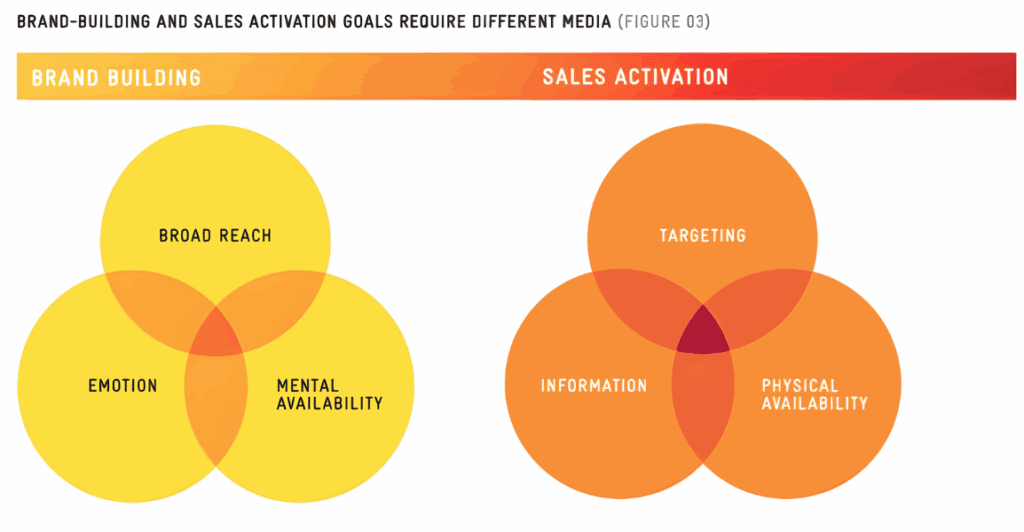
Binet & Field’s Media in Focus, reminds us that brand growth depends on balancing long-term brand building with short-term sales activation. The same principle applies to innovation. For a new product to succeed, it must not only generate short-term trial but also build lasting mental availability so it is easily recalled across buying situations. This is where Category Entry Points matter: by linking innovations to the contexts that drive consumer choice, brands ensure their innovations go beyond achieving a quick sales spike, creating enduring memory structures that sustain growth over time.
Beyond Products: How CEPs Shape Broader Innovation
While product design is the most obvious place to apply CEPs, their value extends much further. They influence how organisations approach services, experiences, and communication across the entire customer journey.
Service innovation: for example, “when the boiler breaks down late at night” shapes how emergency response offerings are designed and delivered.
Packaging innovation: for example, “when needing a resealable option on the go” guides the design of convenient, portable pack formats.
Portfolio innovation: ensures each brand covers distinct occasions, reducing overlap and minimising cannibalisation.
Communication innovation: for example, “when searching for inspiration late at night” informs the timing and tone of digital campaigns.
By applying CEP thinking beyond products, businesses can create stronger alignment across every consumer touchpoint, ensuring that all forms of innovation connect to the real contexts that drive behaviour.
Building a More Effective Innovation Strategy
Successful innovation requires more than ideation. It needs a disciplined process for deciding which opportunities are worth pursuing and how they should be brought to market.
Before progressing an idea, innovation teams should be able to answer:
- Which customer need or Category Entry Point does the innovation address?
- How frequently and widely does that buying situation occur?
- What progress is the customer trying to make?
- Why is the current solution inadequate?
- Does the proposed innovation offer a meaningful improvement?
- Does the brand have permission and capability to deliver it?
- How will the product be recognised and retrieved at the moment of need?
- Which existing brand assets and associations should be retained?
- How will success be measured beyond initial trial?
- Will the innovation grow the portfolio or merely redistribute existing sales?
Innovation Strategy Examples: How Three Brands Answered the Key Questions
The ten questions are not intended to create a rigid stage-gate process. Their purpose is to help teams establish whether an innovation addresses a real buying situation, offers a meaningful improvement and has a credible route into customer memory.
The examples below show how successful innovations can answer several of these questions at the same time.
Apple iPhone: Combining Familiar Customer Jobs in a Better Solution
When Apple launched the iPhone in 2007, it was not asking customers to adopt an entirely unfamiliar set of behaviours. People already made calls, listened to music, accessed the internet, took photographs and sent messages. The opportunity was to combine these activities within one more intuitive device.
The iPhone therefore addressed several of the Innovation Strategy questions:
- Which customer need did it address? The need to communicate, access information and entertainment while away from a computer.
- What progress was the customer trying to make? To carry out several everyday tasks through one convenient device.
- Why were existing solutions inadequate? Mobile phones, music players and early internet-enabled devices often required separate products or complicated interfaces.
- Did the innovation provide a meaningful improvement? Multi-touch navigation and the integration of several functions made the experience simpler and more coherent.
- Did Apple have permission to deliver it? The iPod and Mac had already built associations with intuitive technology, design and digital media.
- Which brand assets and associations were retained? Apple’s minimalist design, product naming, retail experience and focus on simplicity carried into the new category.
The innovation introduced important new technology, but its value was explained through familiar customer jobs. This reduced the cognitive effort required to understand the product while giving buyers several situations in which the iPhone could become relevant.
The iPhone later expanded into more Category Entry Points as applications, cameras, maps, payments and streaming became part of everyday mobile behaviour. Innovation created the initial product, while continued development increased the number of situations in which Apple could come to mind.
Dollar Shave Club: Redesigning How an Existing Product Was Bought
Dollar Shave Club did not invent shaving or produce an entirely new type of razor. Its innovation addressed the cost, complexity and inconvenience surrounding the way blades were traditionally purchased.
The company could answer several important questions clearly:
- Which customer need did it address? Regular access to functional razor blades without the expense and inconvenience of buying premium cartridges in-store.
- Which buying situation mattered? When blades became blunt or customers realised they had forgotten to buy replacements.
- Why was the current solution inadequate? Established razor systems were perceived as expensive, complicated and dependent on repeated retail visits.
- What meaningful improvement did the innovation provide? Simple product tiers, predictable prices and automatic delivery reduced effort.
- Could the business deliver the promise consistently? The direct-to-consumer subscription model was designed around recurring fulfilment.
- How would the offer be recognised? Its irreverent launch film, founder-led story and distinctive tone dramatised the simplicity of the proposition.
- Would the innovation grow the category or redistribute existing sales? It attracted customers away from traditional razor brands while also normalising subscription purchasing within the category.
This is a useful reminder that Innovation Strategy does not have to begin with a new physical product. The source of innovation may be the business model, pricing structure or route to market.
Dollar Shave Club took a routine and often frustrating replenishment task and made it more automatic. Its communications then ensured that customers understood and remembered the difference.
LEGO: Restoring Core Equity While Creating New Reasons to Engage
LEGO’s turnaround provides a different type of Innovation Strategy example. During the early 2000s, the company had expanded into numerous products and experiences, some of which moved too far away from the core building system and the associations buyers already held.
The business subsequently refocused on the LEGO brick and developed innovation around the strengths that customers already valued.
This approach answered several of the strategic questions:
- What customer need did the company address? Creative play, construction, storytelling and shared family activity.
- What existing associations needed to be retained? The LEGO name, brick, system of play and connections with imagination and building.
- Why were some previous innovations inadequate? Portfolio expansion had created complexity and weakened focus on the core product.
- Did the revised innovation strategy offer a meaningful improvement? New themes, licensed properties, digital extensions and more sophisticated sets expanded the possibilities of the brick rather than replacing it.
- Did LEGO have permission to deliver these ideas? Its established authority in construction play made adjacent themes and more advanced building experiences credible.
- How would success extend beyond initial trial? Compatible sets, collectability and repeated building occasions encouraged continued engagement.
- Would the innovations grow the portfolio? Themes such as LEGO Star Wars attracted new audiences and created additional occasions while remaining connected with the core system.
LEGO did not abandon innovation. It became more disciplined about where innovation should take place.
The lesson is that new growth does not always require the removal of familiar products or memory structures. Innovation can extend hard-won equity by creating additional reasons to engage with the same recognisable brand.
Together, these three examples demonstrate different routes to effective Innovation Strategy:
- Apple combined familiar customer jobs within a new technological solution.
- Dollar Shave Club changed the business model and purchasing experience.
- LEGO returned to its core equity and used innovation to extend, rather than replace, it.
In each case, the innovation addressed a recognisable customer situation, offered a meaningful improvement and connected the new idea with assets or associations the brand could credibly own.
Ready to Test Your Innovation Ideas Using CEPs?
At SmilingCFO, we help organisations apply CEPs to innovation pipelines. Our Mental Availability Assessments and CEP mapping guide ideation, prioritisation, and portfolio planning so that new ideas are anchored in real consumer contexts
We provide clarity on:
- which CEPs each brand should own
- which ones to step back from
- where white spaces exist for growth
Innovation doesn’t have to be a gamble, use CEPs to de-risk your pipeline and understand where the real opportunities lie.
References
NielsenIQ, The Value of Failures in the World of SMB, 2022.
McKinsey & Company, The New Growth Game, 2016.
and Eight Lessons on How to Get the Growth You Planned, 2017.
Jenni Romaniuk, Better Brand Health 2023 https://marketingscience.info/better-brand-health/
Binet, L. & Field, P., Media in Focus: Marketing Effectiveness in the Digital Era, IPA, 2017.
Take the Mental Availability Review
https://mentalavailability.smilingcfo.co.uk
This free review assesses how well placed your brand and organisation is to win the Mental Availability battle.